32 answers · updated 2026-11-24
Continental tyres FAQ for UAE drivers
This page answers the questions UAE drivers ask us most about buying, fitting and looking after Continental tyres, from reading your tyre size to what the warranty does and does not cover. Every answer is written for local conditions: road surfaces that pass 60°C in summer, sand on the hard shoulder, speed bumps in every community and long E11 runs at 120 to 140 km/h. We are an independent retailer and mobile fitter that sells only Continental tyres in Dubai, Abu Dhabi and Sharjah. If your question is not here, browse the full Continental range, our tyre services or the blog, or send us your tyre size on WhatsApp.
- New Continental tyres, DOT shown before fitting
- Fitted at your car
- Price agreed on WhatsApp first


FAQ
Buying Continental tyres
What is the price of Continental tyres in the UAE?
Continental tyres in the UAE typically cost from about AED 300 per tyre for 15 to 16 inch sedan sizes up to AED 2,000 or more for 21 to 22 inch SUV and performance sizes. A common 17 inch touring tyre sits around AED 420 to 650 and an 18 inch around AED 520 to 850. The final figure depends on size, load and speed rating, OE marking and stock, and we confirm it on WhatsApp. See the Continental tyre price guide for more rim sizes.
Where do I find my tyre size?
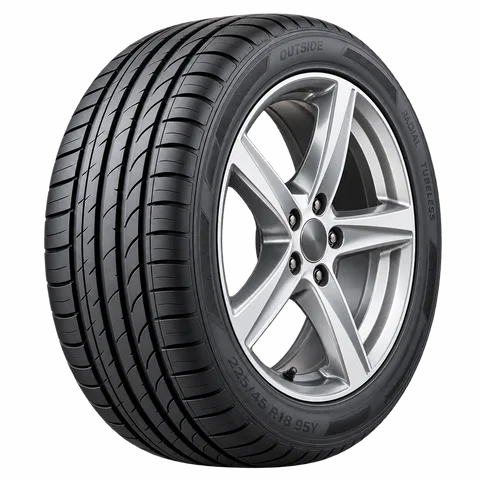
Your tyre size is printed on the sidewall of the tyre and on the placard inside the driver's door frame. It reads like 225/45 R17 94W: 225 mm width, a sidewall height 45% of the width, a 17 inch rim, load index 94 and speed rating W. Copy the full code including the load and speed figures, because two tyres with the same size can carry different ratings. You can also check common sizes on our Continental tyres by car make pages.
Can I fit a different size from the one on my car now?
Stick to the size on the door placard or in the owner's manual unless the car maker lists an approved alternative. A different rim diameter or overall tyre height changes speedometer readings, ABS and stability control behaviour and clearance in the wheel arch. Some cars list two or three approved sizes, often for optional wheels. If a previous owner fitted non-standard wheels, send us a photo of the sidewall and the placard and we check what is safe before ordering.
What do MO, star, AO and other OE markings mean?
OE markings show that a tyre was developed and approved for a specific car maker: MO or MO1 for Mercedes-Benz, a star for BMW, AO for Audi, N0 to N2 for Porsche and T0 for Tesla. A marked tyre has the same size as the standard version but a compound and construction tuned to that maker's spec. We recommend matching the marking where it is available. Our guide to tyre OE markings explains each code and when it matters most.
How fresh are the tyres you sell?
We fit recent Continental stock and show you the DOT code before any tyre goes on the car. The last four digits are the week and year of manufacture, so 3424 means week 34 of 2024. Tyres more than five years past their DOT date are commonly rejected at inspection, and rubber in UAE heat ages faster when stored badly, so we do not supply old stock. Learn how to read a Continental DOT code before you buy anywhere.
Should I buy UltraContact, MaxContact or ComfortContact Gen 6 or Gen 7?
The Gen 6 line, meaning the UltraContact UC6, MaxContact MC6 and ComfortContact CC6, is the one most widely stocked in the UAE today, and it suits local heat and highway use well. Gen 7 versions such as the UltraContact UC7 bring updated compounds, but availability varies by size, so some sizes are only offered in Gen 6 for now. Send your size and we tell you which generations are in stock and the price of each.
Which Continental tyre is quietest for a sedan?
For a quiet sedan ride, the ComfortContact CC6 and the PremiumContact 7 are the two patterns we suggest most often. ComfortContact is tuned for low noise and a soft ride at a lower price, while PremiumContact 7 adds sharper wet and dry grip for faster highway driving. In selected sizes, ContiSilent foam inside the tyre cuts cabin noise further. Road surface matters too: grooved concrete on some Dubai roads is loud on any tyre.
Do I need to replace all four tyres at once?
No, but replace tyres at least in pairs on the same axle so both sides grip and wear evenly. Fit the newer pair on the rear axle, which helps the car stay stable if it loses grip in the wet. All-wheel-drive cars such as Audi quattro models, many Subarus and some SUVs are sensitive to tread depth differences between axles, so four tyres is often the safer choice there. Read when to replace tyres in the UAE for wear limits.
FAQ
Technical questions
Can I mix tyre brands or models on one car?
Mixing brands or patterns across axles is legal in the UAE, but both tyres on the same axle should always be the same brand, model, size and tread depth. Different patterns grip and steer differently, and a mismatch on one axle can make the car pull or feel unstable under braking. On all-wheel-drive cars, matching all four is the safest choice. Our post on mixing tyre brands and run-flats covers the combinations that work and the ones to avoid.
Can I replace run-flat tyres with standard tyres?
Yes, you can swap run-flats for standard tyres, but only if you add a way to deal with a puncture, since most run-flat cars have no spare wheel. That means carrying a sealant and compressor kit or a space-saver spare, and keeping the TPMS working. Standard tyres usually ride softer and cost less. Change all four, not one axle, so the car behaves consistently. See Continental run-flat tyres in Dubai to compare SSR and standard options.
Do tyres affect fuel consumption?
Yes. Rolling resistance, the energy a tyre uses as it flexes, accounts for a noticeable share of a car's fuel use, so a low-rolling-resistance tyre can lower consumption over thousands of kilometres. The EcoContact 6 is Continental's pattern built around this. Pressure matters as much as the tyre: running 4 to 6 PSI below the placard value raises rolling resistance and heat. Our EcoContact 6 review looks at how it suits UAE driving.
Why are my tyres noisy?
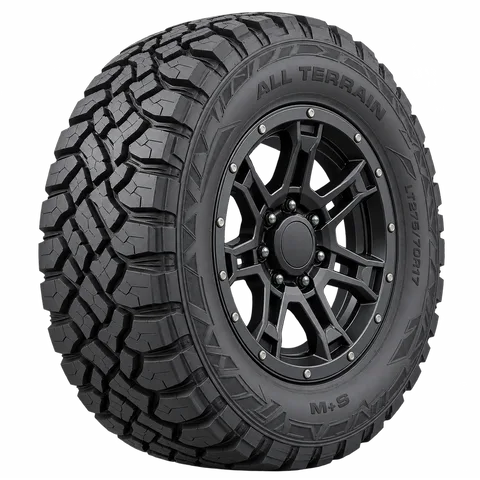
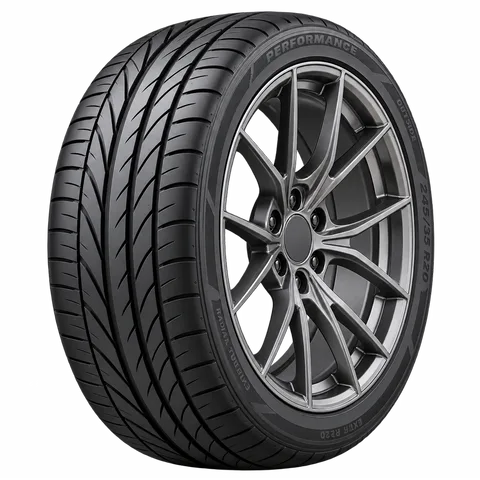
Tyre noise usually comes from the road surface, uneven wear or the tyre type. Grooved concrete and coarse asphalt are loud on any tyre. A humming or growling that rises with speed often means cupped or feathered wear from worn shock absorbers or bad alignment, and it can also point to a wheel bearing. Performance and all-terrain patterns are naturally louder than touring tyres. If the noise started suddenly, have the tread checked and book a wheel alignment check.
Why does my car pull to one side or vibrate at speed?
A pull to one side usually means uneven tyre pressure or misalignment, while vibration at 90 to 120 km/h usually means a wheel out of balance. Check all four tyres cold first, since one tyre 3 to 4 PSI low can cause a pull. Speed bumps and kerbs knock out alignment, and lost weights or packed sand upset balance. A shaking steering wheel points to the front wheels, a vibrating seat to the rear. Book wheel balancing and an alignment check.
Why does tread depth matter and what is the legal minimum?
The legal minimum tread depth in the UAE is 1.6 mm, and the federal traffic fine for unfit tyres is AED 500 and 4 black points. Tread channels water away from the contact patch, so grip in rain falls well before the limit. We advise replacing at around 3 mm. Small bars in the main grooves mark 1.6 mm: when the tread is level with them, the tyre is finished. See our guide to driving in UAE rain, fog and sand.
What tyre pressure should I run in UAE summer heat?
Run the pressure printed on the door placard, measured cold, all year round. Pressure rises about 1 PSI for every 5 to 6°C, so a tyre set at 35 PSI in the morning can read 39 to 40 PSI after highway driving in July. That rise is expected, so never let air out of a hot tyre. Under-inflation is the real danger, because it builds heat and causes blowouts. Our summer tyre pressure guide has figures for common cars.
Do I need winter or all-season tyres in the UAE?
No. UAE drivers do not need winter tyres, and summer or all-season touring tyres suit the climate. Winter compounds are soft and designed for temperatures below 7°C, so on roads that pass 60°C they wear quickly and lose grip. All-season tyres work in the UAE but give up some dry grip and tread life against a good summer tyre. Read our all-season tyres in the UAE guide before choosing one for a trip to colder countries.
How long do Continental tyres last, and how often should I check them?
Continental tyres in the UAE usually last 3 to 5 years, depending on mileage, pattern and driving style, and should be replaced at 5 to 6 years from the DOT date whatever the tread. Touring tyres last longer than performance tyres, which trade tread life for grip. Check pressure monthly when cold, and look over the tread and sidewalls before long trips. Rotate every 8,000 to 10,000 km. Our post on how long Continental tyres last has more detail.
FAQ
Mobile fitting
What is included in your mobile tyre fitting?
Our mobile fitting includes removal of the old tyre, mounting the new Continental tyre, a new valve, balancing on the van's machine, wheel bolts torqued to spec, pressure set to the door-placard value and disposal of the old tyres. We also show you the DOT date before fitting. Fitting labour starts from AED 100 per visit, and tyres are priced separately by size. Wheel alignment is done at a partner workshop. Details are on our tyre replacement service page.
How much does mobile tyre fitting cost?
Mobile tyre fitting starts from AED 100 per visit, and the same starting price applies to a tyre change or a pressure check. The tyres themselves are priced per tyre by size, load rating and OE marking. Larger 4x4 tyres, extra wheels and late-night jobs in remote areas can change the total, so we quote the full price on WhatsApp before the van sets off. Compare tyre costs on our Continental tyre prices guide.
How long does it take to fit four tyres?
Fitting four tyres at your location usually takes 45 to 60 minutes once the van arrives, and a single tyre usually takes about 20 minutes. Larger SUV and 4x4 wheels, run-flats, seized wheel bolts and TPMS sensors that need re-learning can add time. You do not need to stay with the car the whole time if the keys are available. See how it works on our tyre fitting at home in Dubai page.
How quickly can you reach me?
Our vans usually reach city areas in 30 to 60 minutes, any hour of the day or night. That covers most of Dubai, Abu Dhabi and Sharjah, while remote industrial areas, desert roads, rush-hour traffic and unusual sizes that we collect from stock first take longer. We give you a realistic arrival time when you book and share updates on the way. For night breakdowns, see our 24-hour tyre replacement service.
Which areas do you cover?
We fit Continental tyres across Dubai, Abu Dhabi and Sharjah, at homes, offices, building basements, mall car parks and the roadside where it is safe to stop. That includes communities such as Dubai Marina, JVC and Al Barsha, Mussafah and Khalifa City in Abu Dhabi, and Al Nahda and Muwaileh in Sharjah. Al Ain, Ruwais and the Western Region are covered by appointment rather than on demand. See local details on our Dubai, Abu Dhabi and Sharjah pages.
Can I pay with Tabby or Tamara?
Yes, you can split the cost of tyres and fitting into 4 interest-free payments with Tabby or Tamara, subject to their approval. You can also pay by credit or debit card, Apple Pay or cash on site. Splitting the payment helps with sets of large SUV tyres, which can pass AED 4,000 for four. Every job comes with a VAT invoice. Read how it works on our Continental tyres with Tabby and Tamara page.
Do I need to be there when you fit the tyres?
No, you do not need to stay for the whole job, but someone has to hand over the keys and the locking wheel nut key if the car has one. Many customers leave the car in a basement or office car park and get photos of the DOT codes and the finished job on WhatsApp. For towers with visitor passes, share the security contact and we arrange access.
FAQ
Warranty, repairs and after-sales
What does the tyre warranty cover?
The manufacturer's warranty covers defects in materials and workmanship, such as tread separation or a faulty bead, not road hazard damage. Punctures, cuts, sidewall bulges from potholes or speed bumps, kerb damage, wear from misalignment and damage from running under-inflated are not covered. A warranty claim needs the tyre, your invoice and an inspection of the fault. Our Continental tyre warranty guide explains what to keep and how a claim works.
What should I do if I get a puncture?
Slow down, switch on your hazard lights and stop somewhere safe off the main carriageway as soon as you can. Driving on a flat standard tyre destroys the sidewall within a few hundred metres and turns a cheap repair into a new tyre. On run-flats, stay under 80 km/h and within the distance in your owner's manual. Do not stand on the E11 hard shoulder. Book flat tyre repair and share your location on WhatsApp.
When can a punctured tyre be repaired?
A punctured tyre can usually be repaired if the hole is in the central tread area, no larger than about 6 mm, and the tyre was not driven flat. Damage on the shoulder or sidewall, several punctures close together, a cut rather than a nail hole, or any internal damage from running deflated means the tyre has to be replaced. A proper repair uses a plug-patch fitted from the inside. Our puncture repair page shows what we check.
Can a run-flat tyre be repaired?
A run-flat tyre can sometimes be repaired, but only if it was not driven far without air and the puncture is in the central tread. Running deflated can damage the reinforced sidewall from inside without any visible mark, and many car and tyre makers advise replacing rather than repairing in that case. We remove the tyre and inspect the inner liner before deciding. Our run-flat SSR guide explains the limits in more detail.
How can I tell if a tyre is damaged beyond repair?
A tyre is beyond repair if it has a bulge, a cut showing cords, cracking deep enough to catch a fingernail, or tread worn to 1.6 mm. Bulges on the sidewall are the most common problem we see, usually from speed bumps and potholes, and they mean the internal cords have broken. Fine surface cracks point to age and heat. Our tyre damage guide has photos of each type and what each one means.
What happens to my old tyres?
We take your old tyres away and send them for disposal or recycling as part of every fitting, at no extra charge. You do not need to store them or take them to a scrapyard. If you want to keep a tyre, for example as a spare with good tread, tell the technician before the job starts. Spare wheels need checks of their own, so see our spare tyre service if yours has sat in the boot for years.
Do new tyres need balancing and alignment?
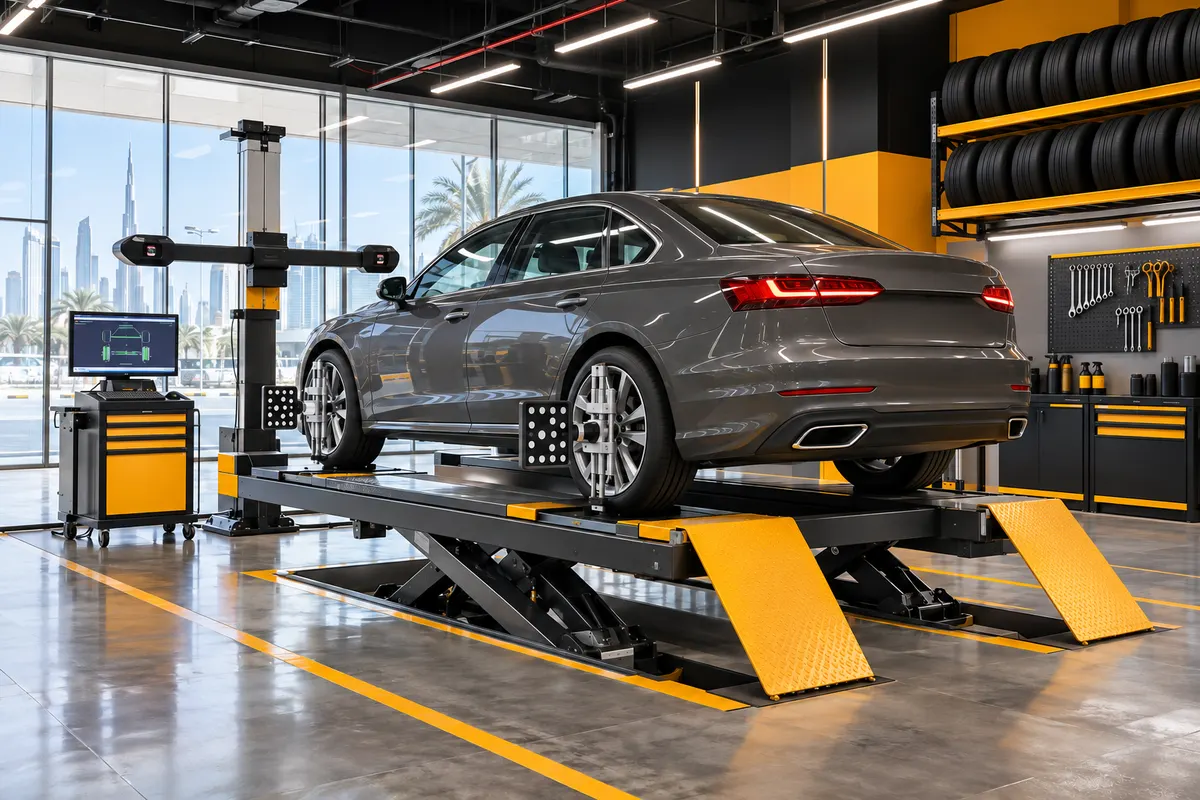
New tyres always need balancing, and we balance every wheel on the van as part of the fitting. Alignment is not done automatically, but we recommend it when the old tyres wore unevenly on one edge, the car pulls, or the steering wheel sits off-centre. Poor alignment can finish a new tyre early, sometimes within 15,000 km. Alignment needs a fixed rig, so we arrange it at a partner workshop. Book a wheel alignment after fitting if needed.
Should I check anything after new tyres are fitted?
Have the wheel bolt torque rechecked after the first 50 to 100 km, and check the tyre pressure cold after the first week. New tyres also have a light run-in period of a few hundred kilometres, when grip is slightly lower, so brake gently at first. If your car has TPMS and a warning light stays on, the sensors may need a re-learn or replacement. Our TPMS sensor replacement page explains what to expect.
Need Continental tyres? Send us your tyre size.
We reply with the Continental options for your car, prices per tyre and DOT dates, then send a technician to wherever the car is.
Card · Cash · Apple Pay