Short answer
Continental SSR stands for Self Supporting Runflat. Reinforced sidewalls carry the car's weight after a puncture, so you can keep driving at a maximum of 80 km/h for up to 80 km to reach a safe place. SSR tyres must be used with a working tyre pressure monitoring system, because you may not feel the pressure loss.
Key takeaways
- SSR means Self Supporting Runflat: stiff sidewall inserts hold the car up when the air is gone.
- Continental quotes up to 80 km at a maximum of 80 km/h after pressure loss, less with a heavy load or high heat.
- A working TPMS is required, because the car feels almost normal on a deflated SSR tyre.
- A run-flat that has been driven deflated should be replaced, not repaired.
- SSR tyres fit standard rims, but mixing run-flat and normal tyres on the same axle is not safe.
Run-flat tyres cause more confusion than any other tyre I fit. Many drivers in Dubai do not know their BMW, Mercedes or MINI is on run-flats until a dashboard warning appears, and some have kept driving for days because the car felt fine. By the time I arrive, the sidewall rubber has turned to powder inside.
Continental's version is called SSR, and when used properly it is a very good safety system. This post explains how it works, how far you can actually go, and what I check before deciding whether a run-flat can be saved or must be replaced.
What does SSR mean on a Continental tyre?
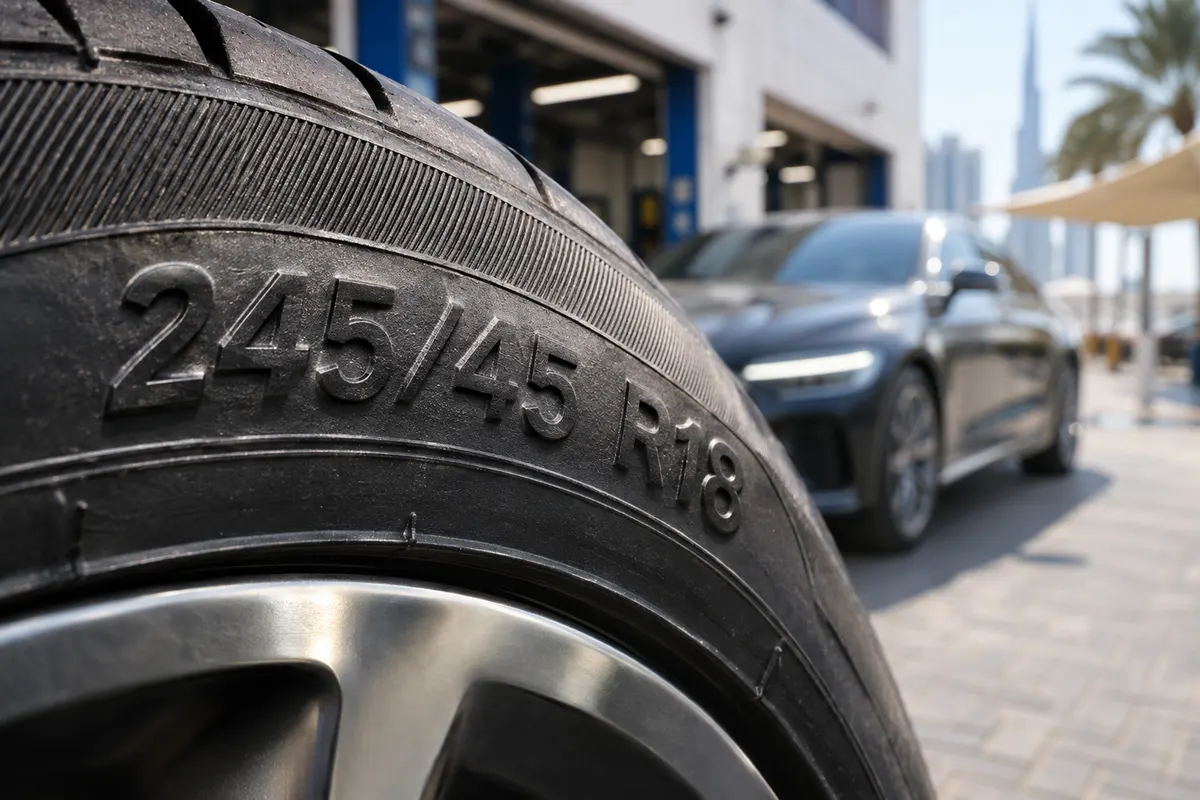
SSR stands for Self Supporting Runflat, Continental's run-flat construction that lets a car keep moving after the tyre has lost all its air. The letters SSR are moulded into the sidewall next to the size, and on many cars you will also see an OE marking such as the BMW star.
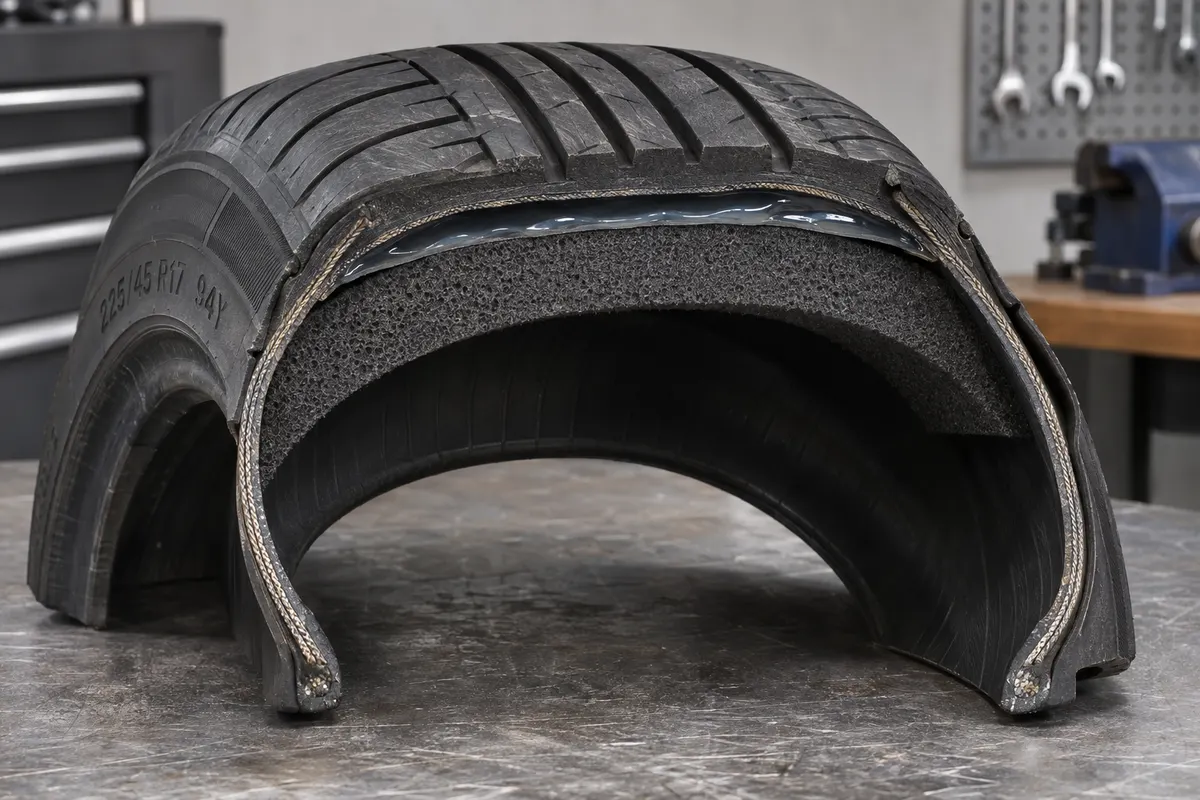
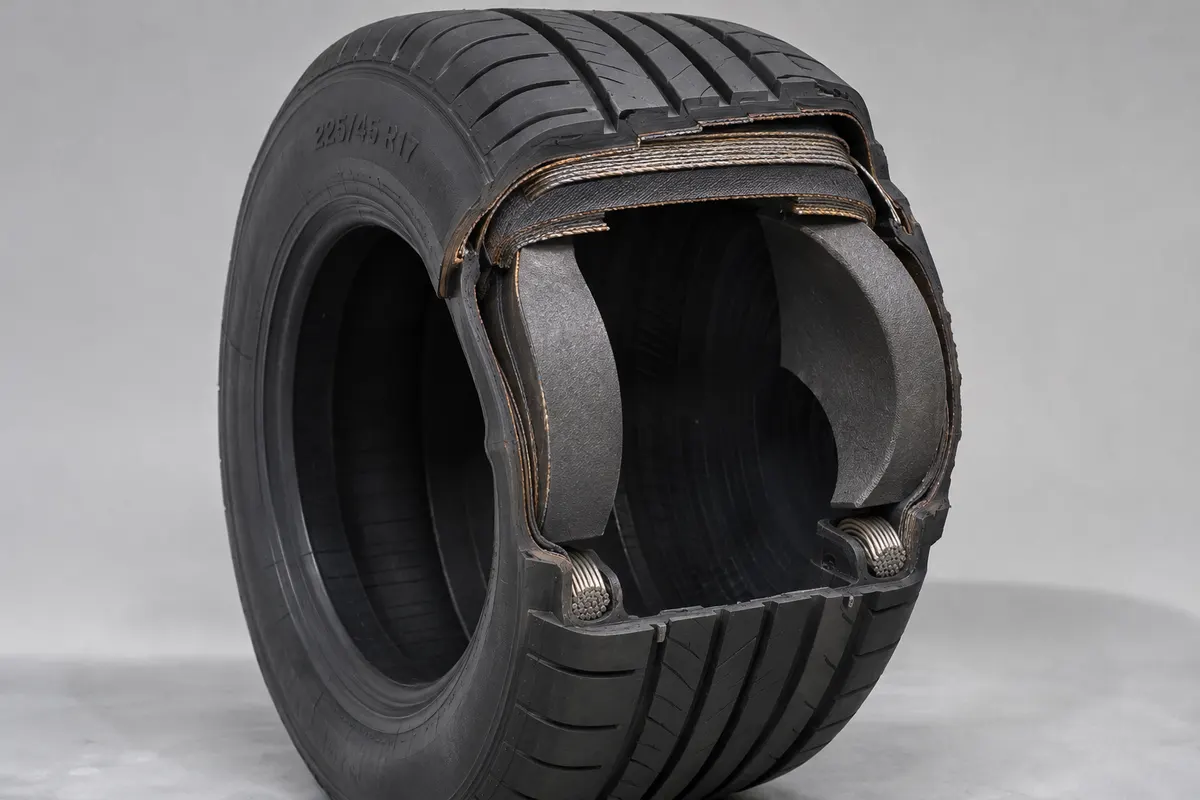
A normal tyre relies entirely on air pressure to hold its shape. When the air goes, the sidewalls fold, the rim drops onto the rubber and the tyre is destroyed within a few hundred metres. An SSR tyre has thick, heat-resistant rubber inserts built into the sidewalls. These inserts are stiff enough to carry the weight of that corner of the car on their own, so the tyre keeps its shape and stays on the rim.
Unlike some older run-flat systems, Continental SSR tyres mount on standard rims. There is no special wheel or internal ring. That makes replacement simpler, but it also means you cannot tell a run-flat from a normal tyre at a glance. Always read the sidewall.
The inserts also explain why run-flats feel firmer. The same stiffness that holds the car up with no air makes the sidewall flex less over speed bumps and expansion joints when the tyre is fully inflated. Car makers tune the suspension to soften this, which is one reason run-flat cars ride best on the tyre type they were designed for.
How far can you drive on a Continental SSR tyre after a puncture?
Continental states that an SSR tyre can be driven for up to 80 km at a maximum speed of 80 km/h after a complete loss of pressure. That figure is a limit, not a target, and it falls with heavy loads, hard cornering and high road temperatures.
In the UAE summer I tell customers to treat 80 km as the absolute ceiling and aim to stop much sooner. A flat SSR tyre generates a great deal of heat inside the sidewall inserts, and on a 65°C road surface that heat builds faster. A fully loaded SUV with four passengers and luggage puts far more strain on the insert than a single driver in a coupe.
The practical advice is simple. When the pressure warning appears, slow to 80 km/h or below, avoid sharp steering, and head for a safe stopping point such as a petrol station or your home car park. Then call for a mobile fitter rather than driving across emirates. From Jebel Ali to Sharjah, for example, is well beyond the safe range.
Once you have stopped, do not try to inflate a run-flat that has been driven flat and carry on. Even if it holds air, the insert may already be damaged. Leave the car parked and let a technician inspect the tyre off the rim.
- Maximum speed after pressure loss: 80 km/h.
- Maximum distance: up to 80 km, shorter with heavy load or high heat.
- Avoid kerbs, speed bumps and sharp turns while running flat.
Why do run-flat tyres need a working TPMS?
Run-flat tyres need a working tyre pressure monitoring system because the driver usually cannot feel when an SSR tyre has lost its air. The stiff sidewalls keep the car level and the steering almost normal, so without a dashboard warning you could drive far past the 80 km limit without knowing.
This is not a theoretical risk. I have removed SSR tyres where the inner sidewall had melted and separated, and the owner had no idea there was a problem until they heard a rumble. In every one of those cases, the TPMS sensor had a flat battery or had been removed during an earlier tyre change.
TPMS sensors last roughly 5 to 10 years before their batteries fail. If your warning light is on permanently, or your car shows one wheel with no reading, get it checked before relying on the run-flats. We handle TPMS sensor replacement at your location, and the sensor is programmed to the car on the spot.
It is also worth knowing which type of TPMS your car uses. Direct systems have a sensor inside each wheel and show the actual pressure of every tyre. Indirect systems estimate pressure loss from wheel speed and only show a general warning. Both work with SSR tyres, but an indirect system has to be reset after new tyres are fitted or after you adjust the pressures, otherwise it may warn late or not at all.
Can a Continental run-flat tyre be repaired?
A run-flat tyre that has been driven with little or no air should be replaced, not repaired. The sidewall inserts can be damaged internally by heat and flexing in a way that is invisible from the outside, and a repaired tyre with a weakened insert may not support the car the next time it is needed.
There is one narrow exception I consider. If the TPMS warned early, the car was stopped quickly, the puncture is a small nail in the central tread and the tyre was never driven flat, a standard plug-patch repair may be possible. I remove the tyre from the rim to inspect the inside before deciding. If I find rubber dust, creases or discolouration on the inner liner, the tyre is finished.
This is why I never quote a run-flat repair over the phone. Our flat tyre repair service includes an internal inspection, and if the tyre cannot be saved I can usually fit a replacement SSR tyre on the same visit, depending on size and stock.
- Driven flat: replace.
- Puncture in the shoulder or sidewall: replace.
- Small nail in the central tread, never driven flat, clean inner liner: repair may be possible after inspection.
Can you replace run-flat tyres with normal tyres?
You can replace run-flat tyres with normal tyres, but only on all four wheels at once and only if you accept the trade-offs. Most run-flat cars have no spare wheel, so a normal tyre puncture leaves you waiting for help, and the suspension was tuned for the stiffer run-flat sidewall.
Some owners like the softer ride of a standard tyre, and on 19 and 20 inch rims the difference over Dubai speed bumps is real. If you go this route, carry a tyre inflator and sealant kit or have a plan for roadside help. Never mix run-flat and normal tyres on the same axle, because the two sidewalls behave very differently in a corner or an emergency stop.
My usual advice is to stay with run-flats if the car came on them, especially for drivers who use long E11 and E311 stretches at night or travel with family. Our run-flat tyres page for Dubai shows the SSR sizes we commonly stock.
Which Continental tyres are available with SSR?
Continental offers SSR versions of several of its car and SUV ranges in selected sizes, mainly in the touring and performance lines fitted to premium German cars. Availability depends on the exact size and rating, so always check the specific fitment.
In the UAE the SSR sizes I fit most often are in the PremiumContact 6 and ContiSportContact 5 ranges, with newer sizes coming through in the PremiumContact 7. Selected SUV sizes in the ContiCrossContact UHP range also come in SSR form for BMW X models.
BMW is the biggest run-flat user on UAE roads, so many SSR tyres carry the BMW star marking. Mercedes and MINI also use run-flats on certain models. When replacing, match both the SSR construction and the OE marking where possible. My guide to tyre OE markings like MO, star and AO explains what those symbols mean, and the Continental tyres for BMW page lists common star-marked SSR sizes.
Are run-flat tyres worth it in the UAE?
Run-flat tyres are worth it for most UAE drivers whose cars were designed for them, because they remove the most dangerous part of a puncture: changing a wheel on a highway shoulder. Stopping on the hard shoulder of Sheikh Zayed Road at night, with traffic passing at 120 km/h, is a real risk that SSR tyres help you avoid. The same applies at night on quieter roads to Hatta or Al Ain, where waiting by the roadside with family is the last thing you want.
The costs are a firmer ride, slightly higher tyre prices and a stricter rule on repairs. On a typical 18 inch premium sedan size, a Continental SSR tyre usually costs a little more than the equivalent standard tyre, and prices vary with size, rating and stock. Tread life is broadly similar when pressures are kept correct.
Run-flats are also sensitive to underinflation in a way that is easy to miss, because the car feels normal. I recommend checking pressures cold every two weeks in summer. For a broader look at wear, see my post on how long Continental tyres last.
How are run-flat tyres fitted and what should you ask the fitter?
Run-flat tyres need a fitter with the right machine and some experience, because the stiff sidewalls make SSR tyres harder to mount and remove than normal tyres. Forcing them on with the wrong technique can damage the bead, the rim or the TPMS sensor inside the wheel.
On my van I use a tyre machine with a helper arm that pushes the stiff sidewall down while the bead is worked over the rim. Without it, a fitter is tempted to lever the tyre, which can tear the bead or crack the sensor. I also lubricate the bead generously and take care with low-profile performance sizes on 19 and 20 inch alloys, where there is very little rubber between the rim edge and the road.
After mounting, the tyre is balanced on the van, the wheel nuts or bolts are torqued to the car maker's specification, and the pressure is set to the placard value. On cars with direct TPMS, I confirm every sensor is reading before I leave. On cars with indirect systems, which use the ABS sensors to detect a change in rolling diameter, the system must be reset after new tyres are fitted.
It is worth asking any fitter three questions before work starts on a run-flat car. These are simple, and a good technician will be happy to answer them.
- Do you have a helper arm or run-flat tool on your machine?
- Will you check or reset the TPMS after fitting?
- Can I see the DOT date of the new tyres before fitting?