
Why Abu Dhabi tyres wear differently
Abu Dhabi driving is long, straight and fast. A daily commute from Khalifa City or Al Shamkha to the island is 30–40 km of E10 and E12 at 120 km/h, and the run to Dubai is 140 km of E11. That kind of mileage wears the centre of the tread evenly but cooks tyres that are even slightly under-inflated.
The outer communities also sit next to open sand. Wind-blown sand on the shoulders and at roundabouts in Al Shamkha, Al Falah and Baniyas is abrasive on sidewalls, and construction zones scatter screws and nails that cause most of the punctures we repair in the city.
- Check pressure weekly in summer if you commute on the E10, E11 or E12.
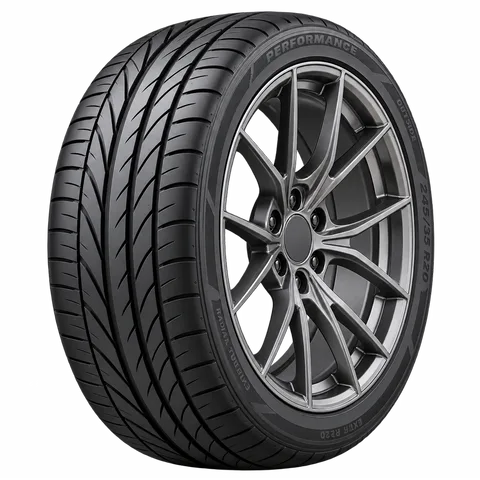
- Choose tyres with a speed rating of at least H (210 km/h) for highway commuting, such as the UltraContact UC7 or PremiumContact 7.
- Inspect sidewalls after driving near construction sites in Yas, Saadiyat and Reem.
Continental tyre sizes and prices we fit most in Abu Dhabi
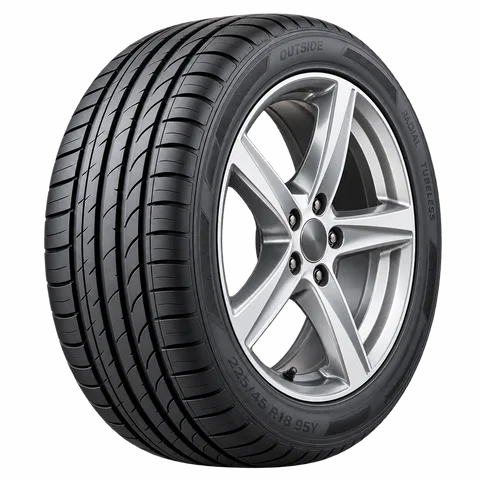
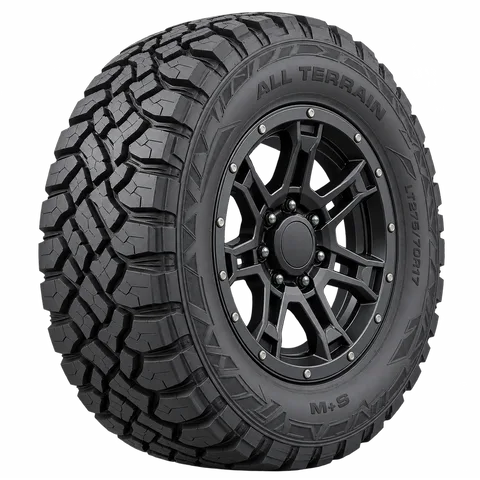
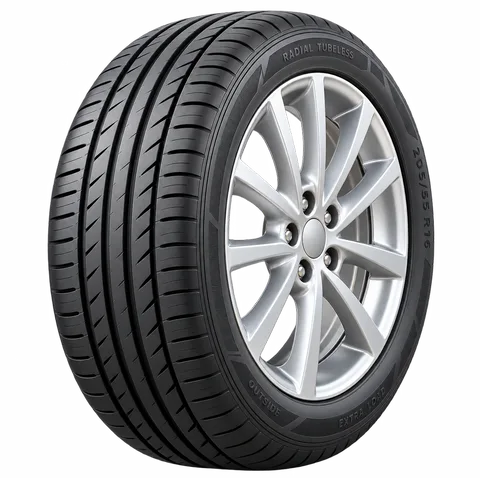
Abu Dhabi has more large SUVs per household than almost anywhere in the UAE, so a typical day's van load leans towards 17–20 inch Continental SUV and 4x4 patterns such as the CrossContact LX2 and TerrainContact A/T, alongside the usual sedan sizes. The ranges below are typical prices per Continental tyre and vary with size, load and speed rating, OE marking and stock; fitting starts from AED 100 per visit. Tell us the size printed on your sidewall and we confirm exact prices on WhatsApp before the van leaves.
| Vehicle | Common sizes | Typical per Continental tyre |
|---|---|---|
| Compact sedan (Sunny, Yaris, Accent) | 185/65 R15, 195/55 R16 | AED 300–480 |
| Family sedan (Camry, Altima, Accord) | 215/55 R17, 235/45 R18 | AED 420–850 |
| Large SUV (Patrol, Land Cruiser) | 265/70 R18, 275/60 R20 | AED 650–1,600 |
| Pickup (Hilux, Ranger) | 265/65 R17, 265/60 R18 | AED 520–950 |
Mussafah tyre shops vs a mobile Continental fitting
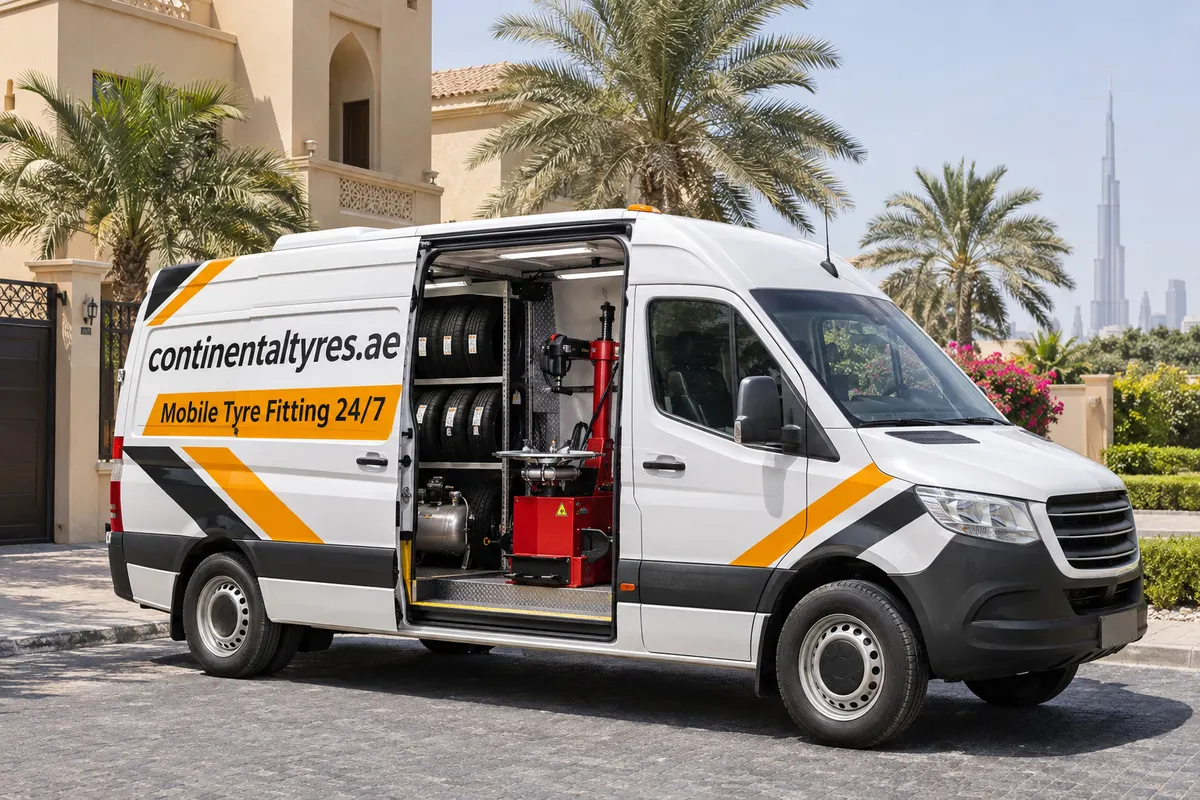
Mussafah's tyre streets have stock, but getting there means queueing in M-sector traffic, waiting for a bay and driving back on the tyres you came to replace. A mobile fitting puts new Continental tyres in a van and brings them to the car, which matters most when the tyre is already flat or the bulge makes the drive unsafe.
You get a fresh DOT date shown to you before fitting, balancing on the spot, and the old tyres taken away. For the long E11 and E22 runs, see our Continental tyres Abu Dhabi page and tyre services.
Island towers, Reem and Saadiyat: where we fit
On the island, Reem and Al Maryah most cars live in basement car parks. Our vans are standard-height, so they clear most basements; where the ramp is too low, we fit in a visitor bay or loading area and walk the wheel down if needed. Let us know the building name and level when you book and the technician brings the right jack for a sloped or tight bay.
Villas in Khalifa City, Al Raha Gardens, Al Reef and MBZ are simpler: a driveway or the street outside is enough. In gated communities, share the gate pass details on WhatsApp so security does not hold the van at the entrance.
Driving to Al Ain or the Western Region
The E22 to Al Ain is about 160 km and the E11 west to Ruwais about 240 km, much of it through open desert with long gaps between service stations. A slow puncture that is a nuisance in the city becomes a breakdown 100 km from the next town, so check tread depth, sidewalls and the spare before a long run.
We cover Al Ain, Ruwais, Madinat Zayed and Liwa by appointment rather than on-demand. For dune trips around Liwa, drop pressures only once you are on the sand and reinflate before you rejoin the tarmac; driving at highway speed on soft tyres is how most desert tyre failures start.
- Carry a working pressure gauge and a 12V compressor on desert trips.
- Check the spare's pressure: it loses air even when unused.
- Replace tyres with cracked sidewalls before a long E22 or E11 run.
Repair or replace after a highway puncture?
A nail or screw in the central tread can usually be repaired with a plug-patch from the inside, which is what we do on site. A puncture in the shoulder or sidewall, a cut longer than about 6 mm, or a tyre that was driven flat for any distance cannot be safely repaired, and we will show you why before recommending a new one.
On the E10, E11 and E12 at 120–140 km/h, a tyre that was run flat even briefly can have hidden damage to the inner liner. If you stopped quickly on the hard shoulder, the tyre is often saveable; if you drove a few kilometres to the next exit, plan on a replacement.