
We supply only Continental and fit off-road tyres at your villa, office or before a weekend trip, across Dubai, Abu Dhabi and Sharjah. Below we cover which pattern suits which kind of driving, the sizes we fit most, and how to look after off-road tyres in sand and heat.
Which Continental all-terrain tyre is best for desert driving?
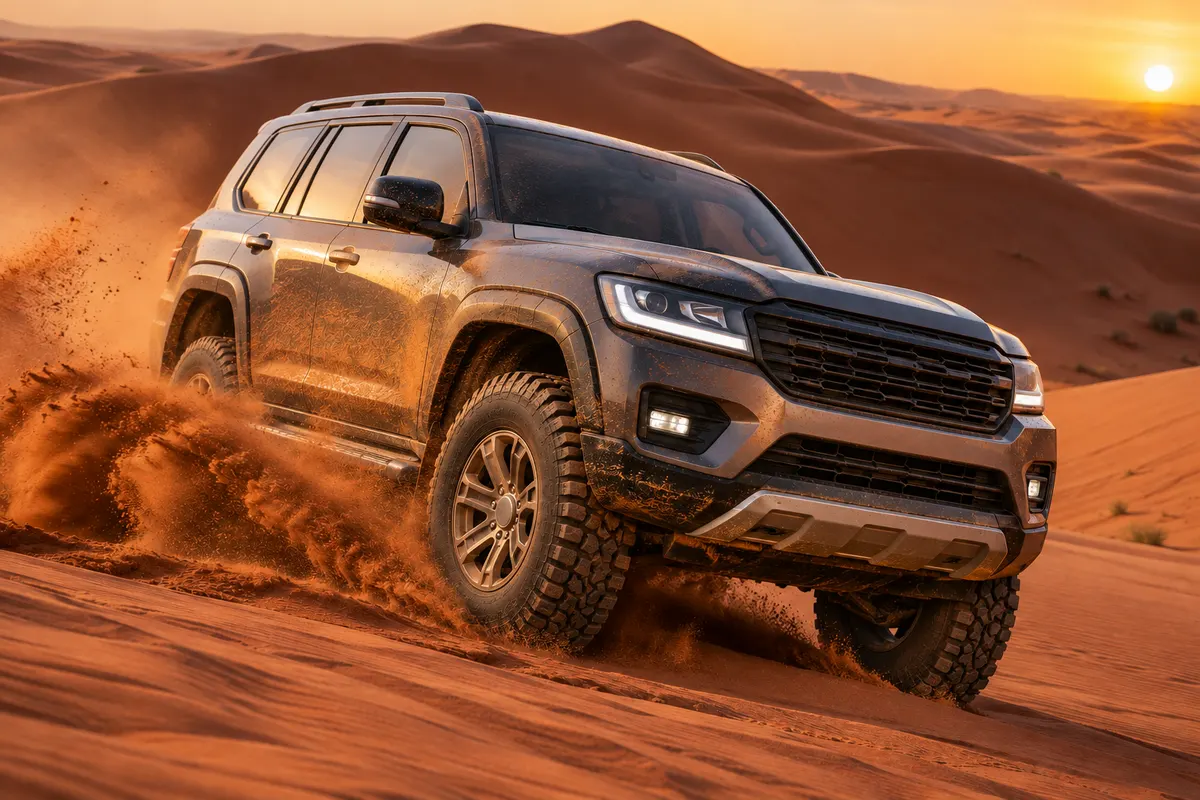
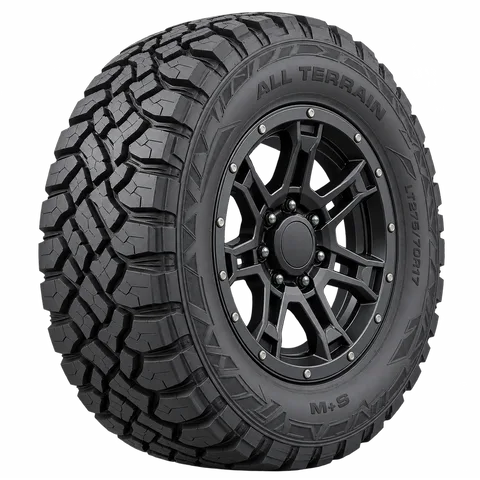
The TerrainContact A/T is the best Continental tyre for regular desert driving in the UAE. Its tread has wide voids that clear sand, chunky shoulder blocks that bite when the tyre is aired down, and a tough casing that resists cuts on rocky wadi tracks.
In soft dunes at Al Faqa, Big Red or Liwa, traction depends more on footprint than tread depth. Airing down to around 15 to 20 PSI lengthens the contact patch, and an A/T tyre's flexible but strong sidewall handles that flex without overheating as quickly as a highway tyre. The TerrainContact A/T also stays reasonably quiet on the highway home, which matters when the drive back from Liwa is over two hours.
For drivers who spend most weekends in the sand and occasionally crawl over rocks in Hatta or Wadi Shawka, the A/T is the right call. If your off-road driving is mostly graded gravel to farms, camps and beaches, a less aggressive tyre will be quieter and wear longer. Our desert driving tyre guide explains how sand type and driving style affect the choice.
What is the difference between all-terrain and highway terrain tyres?
All-terrain tyres have deeper, more open tread for sand, gravel and rocks, while highway terrain tyres have tighter tread for quiet, efficient and long-wearing road driving. Most 4x4s in the UAE spend the large majority of their time on tarmac, which is why many owners are better served by a highway tyre.
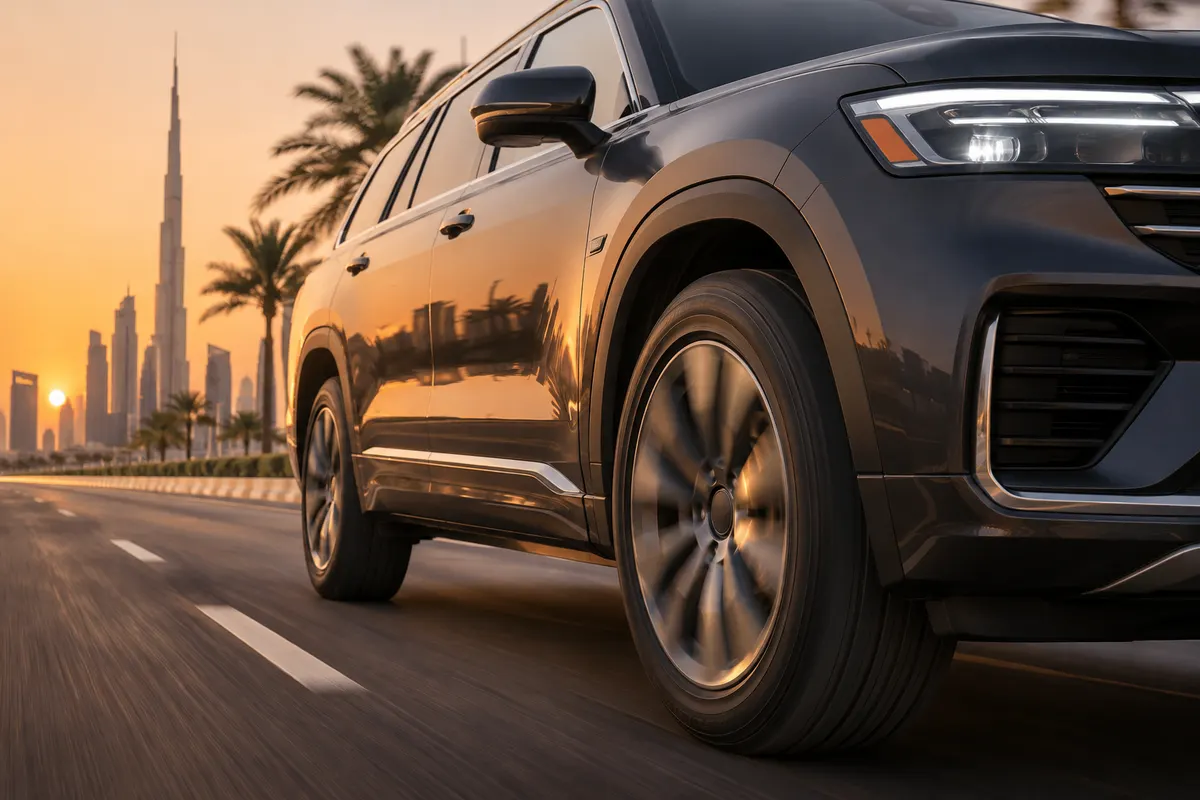
The TerrainContact H/T and CrossContact LX2 are Continental's highway-focused 4x4 tyres. They brake shorter on hot asphalt, use less fuel and are noticeably quieter at 120 to 140 km/h on the E11. They still handle the odd trip across firm sand or a gravel track to a camp site, just not steep, soft dunes.
The CrossContact ATR sits between the two. It has a more open shoulder than a highway tyre and a quieter centre than a full A/T, which suits drivers who do a mix of daily commuting and occasional desert trips. A simple rule we use with customers: if you go into proper dunes more than once a month, choose A/T. If it is a few times a year, choose ATR. If it is never, choose H/T or LX2.
| Continental model | Best use | Common UAE sizes | Typical AED per tyre |
|---|---|---|---|
| TerrainContact A/T | Regular dunes, rocky wadis, mixed use | 265/65 R17, 265/70 R17, 265/65 R18, 275/70 R18 | 520–950 |
| CrossContact ATR | Mostly highway with occasional sand and gravel | 265/65 R17, 265/60 R18, 285/60 R18 | 520–950 |
| Conti4x4Contact | Older 4x4s on 16 and 17 inch wheels | 265/65 R17, 265/70 R16 | 450–780 |
| TerrainContact H/T | Highway-focused 4x4s and pickups | 265/65 R17, 265/60 R18, 275/65 R18 | 520–950 |
| CrossContact LX2 | Quiet highway SUV use, light gravel | 265/65 R17, 265/65 R18, 285/60 R18 | 520–950 |
What sizes do Continental off-road tyres come in for UAE 4x4s?
Continental off-road and all-terrain tyres come in the main UAE 4x4 sizes from 16 to 20 inches, including 265/65 R17, 265/70 R17, 265/65 R18, 285/60 R18 and 275/70 R18. Availability in each pattern varies, so we confirm stock in your size before you order.
The Toyota Land Cruiser 300 GXR commonly uses 265/65 R18, the Land Cruiser 200 commonly uses 285/60 R18, the Prado 150 uses 265/65 R17 and the Nissan Patrol Y62 uses 275/70 R18 or 265/70 R18. Hilux and Fortuner owners commonly run 265/65 R17 and 265/60 R18. Jeep Wrangler owners often run 245/75 R17 or 255/75 R17 depending on trim. You can find model-by-model sizes on our Land Cruiser and Nissan Patrol pages.
For desert driving, smaller wheels with taller sidewalls are better. An 18-inch tyre on a Patrol has much more sidewall to flex than a 22-inch tyre, so it can be aired down further without risking rim damage. Many owners with 20 or 22 inch wheels keep a second set of 17 or 18 inch wheels with A/T tyres just for the desert.
How should I look after off-road tyres in the UAE heat?
The most important habit with off-road tyres in the UAE is reinflating to the door-placard pressure before you drive on tarmac. Driving at highway speed on tyres aired down for sand overheats the sidewall quickly, and in summer, with road surfaces at 60 to 70°C, that can lead to a blowout.
A portable compressor that can reinflate four large tyres in under 15 minutes is the best accessory a desert driver can carry. Check pressures cold the next morning too, because readings taken right after a hot drive are misleading.
After each desert trip, inspect the tyres for cuts, chunks missing from the tread and bulges in the sidewall, especially if you crossed rocky ground. Sand trapped between the bead and rim can cause slow leaks, so if one tyre keeps losing pressure, have it checked. Rotate every 10,000 km to keep wear even across all four, which matters on a 4x4 with a centre differential. Finally, watch the DOT date: tyres more than five years past their DOT date are commonly rejected at inspection, and off-road tyres on weekend cars often age out before the tread wears down. Our tyre pressure check service covers the basics from AED 100.
How much do Continental off-road tyres cost in the UAE?
Continental off-road and all-terrain tyres typically cost AED 520 to 780 per tyre in 17-inch sizes, AED 650 to 950 in 18-inch sizes, AED 800 to 1,250 in 19-inch sizes and AED 950 to 1,600 in 20-inch sizes. All-terrain versions with reinforced construction are usually at the upper end of each band.
For a set of four on a Land Cruiser or Patrol in 18-inch sizes, the total commonly falls between AED 2,600 and AED 3,800. These are typical ranges and vary with size, load index, pattern and stock, and we confirm every price on WhatsApp before booking.
Mobile fitting starts from AED 100 per visit and includes removal, mounting, new valves, balancing on the van, torque to spec, pressures set to the placard and disposal of the old tyres. If the spare is old, it is worth replacing at the same time, because on a desert trip it is the tyre you are most likely to need. You can spread a set across 4 interest-free payments with Tabby or Tamara, subject to their approval. For the wider SUV range, see our Continental SUV tyres page.
Do I need a wheel alignment after fitting off-road tyres?
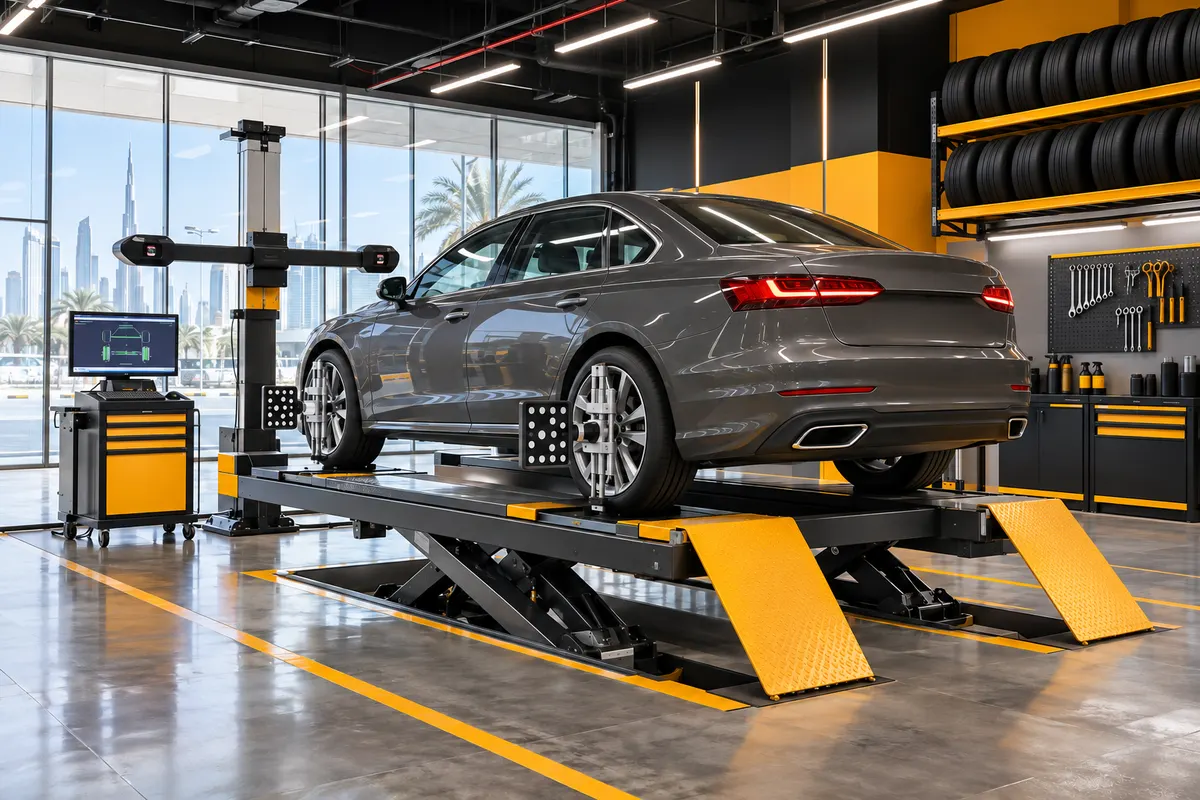
A wheel alignment is a good idea after fitting new off-road tyres if you drive in the desert often, because ruts, rocks and dune landings can knock the steering geometry out. Misalignment wears the shoulders of new tyres unevenly, which wastes expensive tread.
The signs are easy to spot: the car pulls to one side on a straight road, the steering wheel sits off-centre, or the old tyres are worn more on one edge than the other. If any of those apply, book a wheel alignment at a partner workshop soon after the new tyres go on.
Off-road tyres are also heavier than highway tyres, so balancing matters. Every tyre we fit is balanced on the van, but if you feel a vibration at 100 to 120 km/h after a desert trip, sand or mud packed inside the rim can upset the balance. Clean the inside of the wheels and, if it continues, have them rebalanced. Our off-road 4x4 tyres page has more on what to look for in a 4x4 tyre.