Short answer
You can mix tyre brands between axles, but each axle should carry two identical tyres: same brand, model, size and ideally similar wear. On all-wheel-drive cars, match all four as closely as possible. Do not mix run-flat and standard tyres. Replacing run-flats with standard tyres is possible if you carry a spare or sealant kit and keep TPMS working.
Key takeaways
- The minimum rule is two identical tyres on each axle. Ideally all four tyres are the same model.
- On AWD systems such as 4MATIC, xDrive and quattro, big differences in tread depth or rolling circumference can strain the drivetrain.
- Never mix run-flat and standard tyres on the same car.
- Swapping run-flats for standard tyres means carrying a spare or sealant kit, keeping TPMS working and checking the car maker's guidance.
- On staggered fitments, front and rear sizes differ, so tyres are replaced in axle pairs and cannot be rotated front to rear.
At least once a week a customer asks me if they can fit one new tyre of a different brand next to an old one, or replace the run-flats on their BMW with something softer and cheaper. Sometimes the answer is yes, sometimes it is a firm no, and on all-wheel-drive cars the details matter more than most people expect.
In four years of fitting tyres in Dubai, Abu Dhabi and Sharjah I have seen the problems mismatched tyres cause, from a car that pulls under braking to a transfer case warning light on a 4x4. This guide sets out the rules I follow and why.
Can you mix tyre brands on a car?
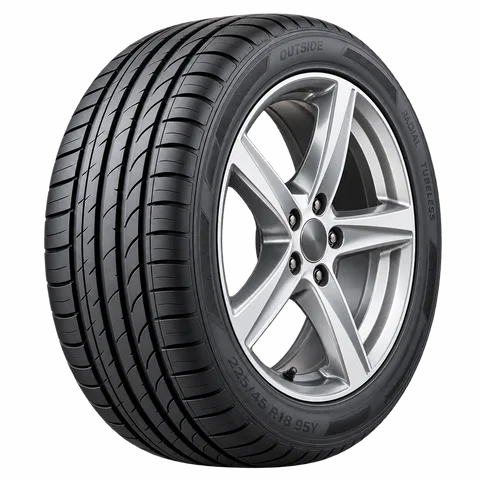
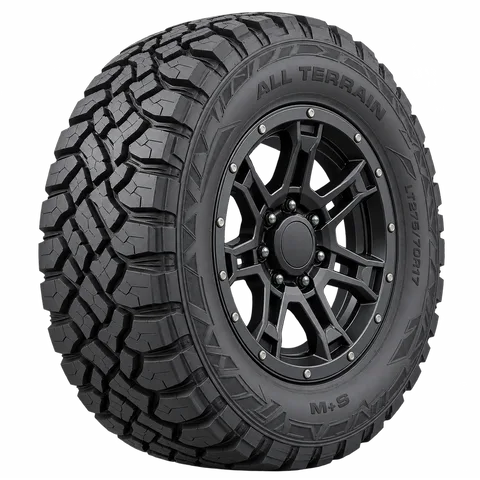
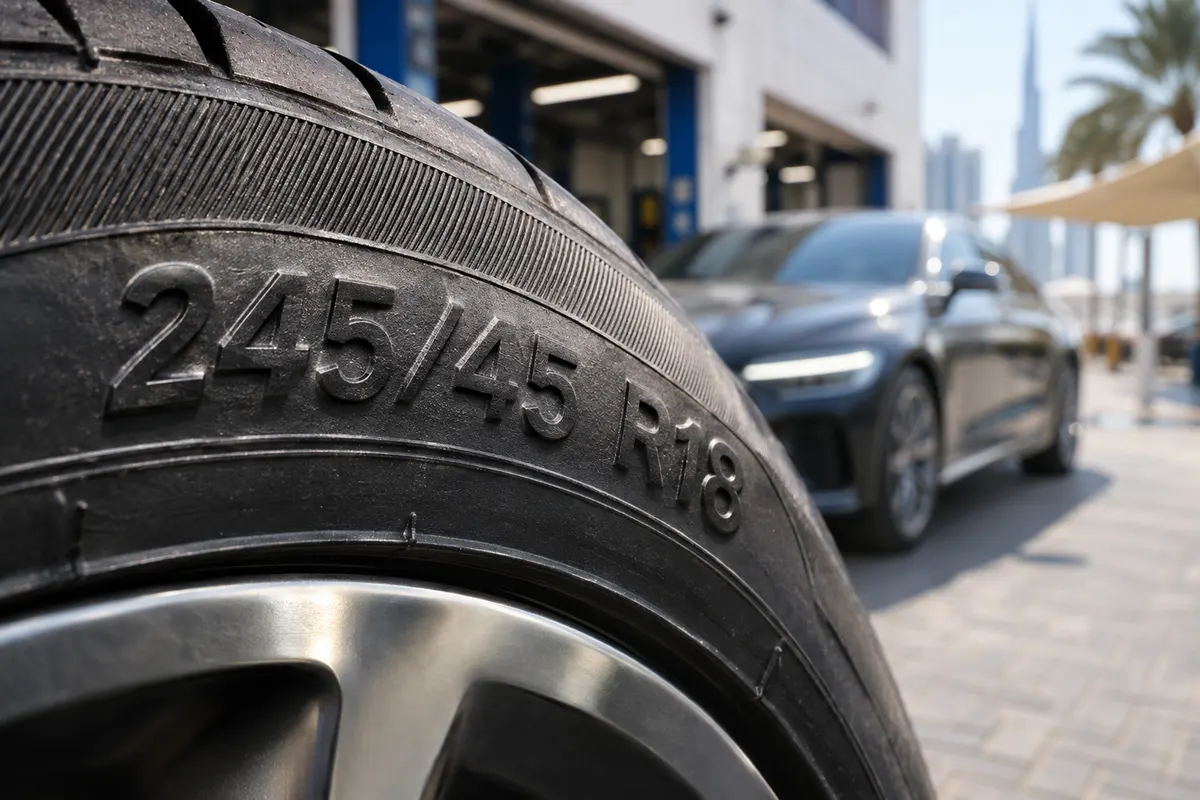
You can mix tyre brands on a car as long as each axle carries a matching pair: the same brand, model, size, load index and speed rating on both sides. Different tyres on the same axle grip, brake and corner differently, which can make the car pull to one side under braking or behave unpredictably in an emergency swerve.
Mixing between axles is less of a problem on a two-wheel-drive car, for example Continental tyres on the front and a different premium brand on the rear, provided the sizes and ratings are correct. It is still not ideal, because the balance of grip front to rear is part of how the car was set up, but it is legal and usually safe if both pairs are good-quality tyres in good condition.
My own preference is all four tyres the same model. It keeps handling predictable, makes rotation possible on cars with the same size front and rear, and means all four wear at a similar rate. If you are replacing two, the new pair generally goes on the rear axle on most cars, because rear grip is what keeps the car stable in a wet corner. I go through that in more detail in when to replace tyres in the UAE.
- Same axle: same brand, model, size, load index and speed rating
- Different axles: acceptable on two-wheel-drive cars if sizes and ratings are correct
- Best: all four the same model
- Replacing a pair: new tyres usually go on the rear axle
Can you mix tyre models from the same brand?
You should not mix different tyre models on the same axle, even from the same brand, because each model has its own compound, tread pattern and construction. A PremiumContact 7 and an UltraContact UC7 in the same size are both Continental tyres, but they grip and wear differently.
The same applies to generations. A PremiumContact 6 next to a PremiumContact 7 on the same axle is a mismatch, even though they look similar. If your current model has been replaced by a newer one, the cleanest option is to fit the new model as a pair on that axle.
When only one tyre is damaged and the other on that axle is nearly new, I try to source the same model and size. If it is no longer available, or the old tyre is well worn, I recommend replacing both tyres on that axle together.
Do I need to replace all four tyres on an AWD car?
On an all-wheel-drive car you often need to replace all four tyres together, or at least keep the tread depth on all four within the limit the car maker allows. Systems such as Mercedes-Benz 4MATIC, BMW xDrive, Audi quattro and many SUV AWD systems connect the front and rear axles, so they expect all four wheels to turn at almost the same speed.
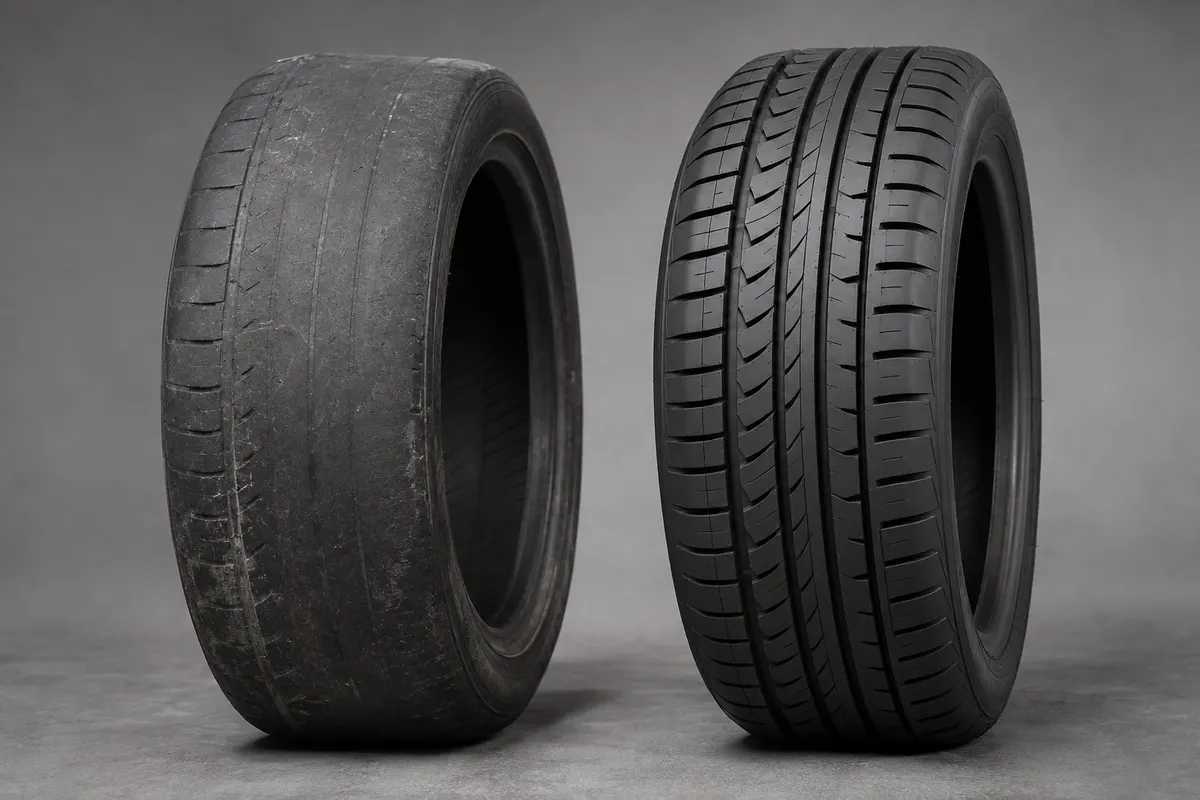
A new tyre has a larger rolling circumference than a worn one of the same size. On a permanent or clutch-based AWD system, that difference makes the centre differential or coupling work constantly to compensate, which builds heat and wear. Some car makers set a maximum tread depth difference between tyres, often a few millimetres; the exact figure is in the owner's manual or available from the dealer, so check it for your car.
In practice, if one tyre on a nearly new AWD set is damaged, replacing just that tyre can be fine. If the other three are well worn, I usually recommend a full set. Mixing brands or models is a bigger issue on AWD, because different tyres in the same nominal size can have slightly different circumferences. For SUVs, our Continental SUV tyres page lists common sizes, and the SUV tyre guide covers load ratings.
| Situation | OK? | What I recommend |
|---|---|---|
| Different brands on the same axle | No | Fit a matching pair on that axle |
| Different brands front and rear, 2WD | Acceptable | Correct sizes and ratings, both pairs in good condition |
| Different models of the same brand, same axle | No | Match the model on each axle |
| One new tyre on an AWD car with worn tyres | Usually no | Check the maker's tread depth limit, often replace all four |
| Run-flat and standard tyres mixed | No | Fit all run-flat or all standard |
| Full set of standard tyres in place of run-flats | Often yes | Carry spare or sealant kit, keep TPMS, check maker guidance |
| OE-marked and unmarked on the same axle | Avoid | Match the marking, or replace the full axle |
| Staggered car, replacing rear pair only | Yes | Same model as the fronts; check AWD limits |
Can I replace run-flat tyres with standard tyres?
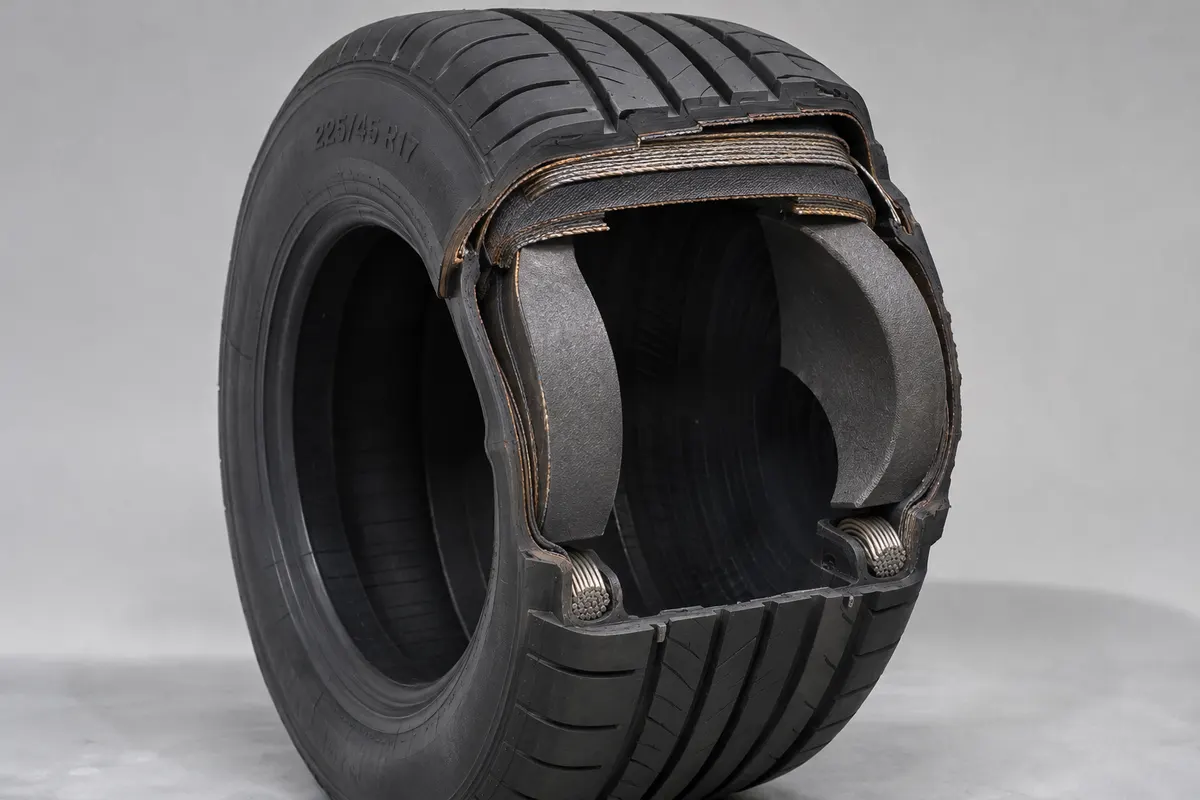
You can replace run-flat tyres with standard tyres on many cars, but only as a full set, and only if you accept the trade-offs. Cars delivered on run-flats, such as many BMW and MINI models, usually have no spare wheel, so with standard tyres a puncture leaves you stranded unless you carry a spare or a sealant and compressor kit.
There are three things to check before switching. First, the car maker's guidance: some cars are set up with suspension tuned for run-flats, and the maker may recommend staying on them. Second, the tyre pressure monitoring system must stay active, because it is how you know you have lost pressure, and it is required on the car either way. Third, you need space and a plan for the spare or sealant kit, and sealant will not fix a large cut or sidewall damage.
The benefit is usually a softer ride and quieter cabin, and standard tyres often cost less. The PremiumContact 7 is the standard tyre I most often fit on cars moving off run-flats. If you would rather stay on run-flats, Continental SSR versions are available in many sizes; see Continental run-flat SSR tyres explained and our run-flat tyres in Dubai page.
- Never mix run-flat and standard tyres on the same car
- Carry a spare or a sealant and compressor kit
- Keep the TPMS sensors working
- Check the car maker's guidance for your model
Do OE markings matter when mixing tyres?
OE markings matter because they show a tyre was developed and approved for a specific car maker, and mixing marked and unmarked tyres on the same axle is best avoided. Common markings include MO for Mercedes-Benz, a star for BMW, AO for Audi and N0 to N2 for Porsche.
An OE-marked tyre can differ from the standard version of the same model in compound, construction or tread detail, tuned to the car's handling, noise and comfort targets. Fitting a marked tyre on one side and an unmarked version of the same model on the other is a mismatch, even though they share a name.
For most drivers, the simple rule is to match what the car came with. If the original tyres were star-marked, buy star-marked. If you cannot find the marked version in stock, fit unmarked tyres as a full axle pair, or better a full set. My guide to tyre OE markings: MO, star and AO explains each marking.
How do staggered front and rear tyres work?
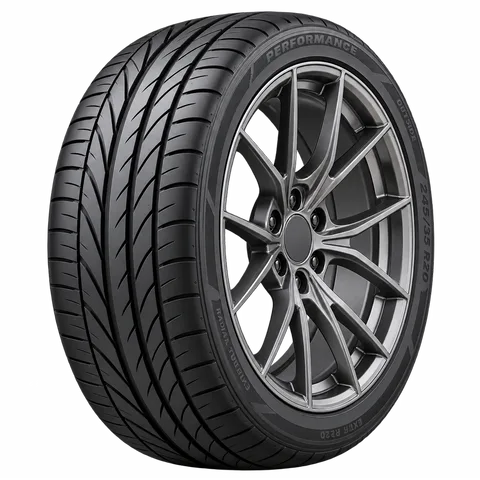
A staggered fitment uses wider tyres on the rear axle than on the front, and sometimes a different rim diameter, so front and rear tyres cannot be swapped with each other. Staggered setups are common on performance cars and some premium saloons and SUVs, such as BMW M and Mercedes-AMG models and Porsches.
Because rotation front to rear is not possible, the rear tyres on a rear-wheel-drive staggered car often wear out before the fronts. That is normal, and replacing the rear pair alone is fine as long as it is the same model as the fronts. On staggered AWD cars, the tread depth rule from the AWD section still applies, so check how far apart the front and rear depths will be.
Make sure the front and rear tyres are the same model and, where relevant, carry the same OE marking. A SportContact 7 on the front and a different model on the rear will change the car's balance at the limit. Our page on Continental tyres for BMW covers common staggered sizes.
What is the safest way to replace tyres when mixing is unavoidable?
The safest way to replace tyres when you cannot match everything is to keep each axle identical, put the newer or better pair on the rear, and stay within the car maker's limits on AWD tread depth. That covers most real situations.
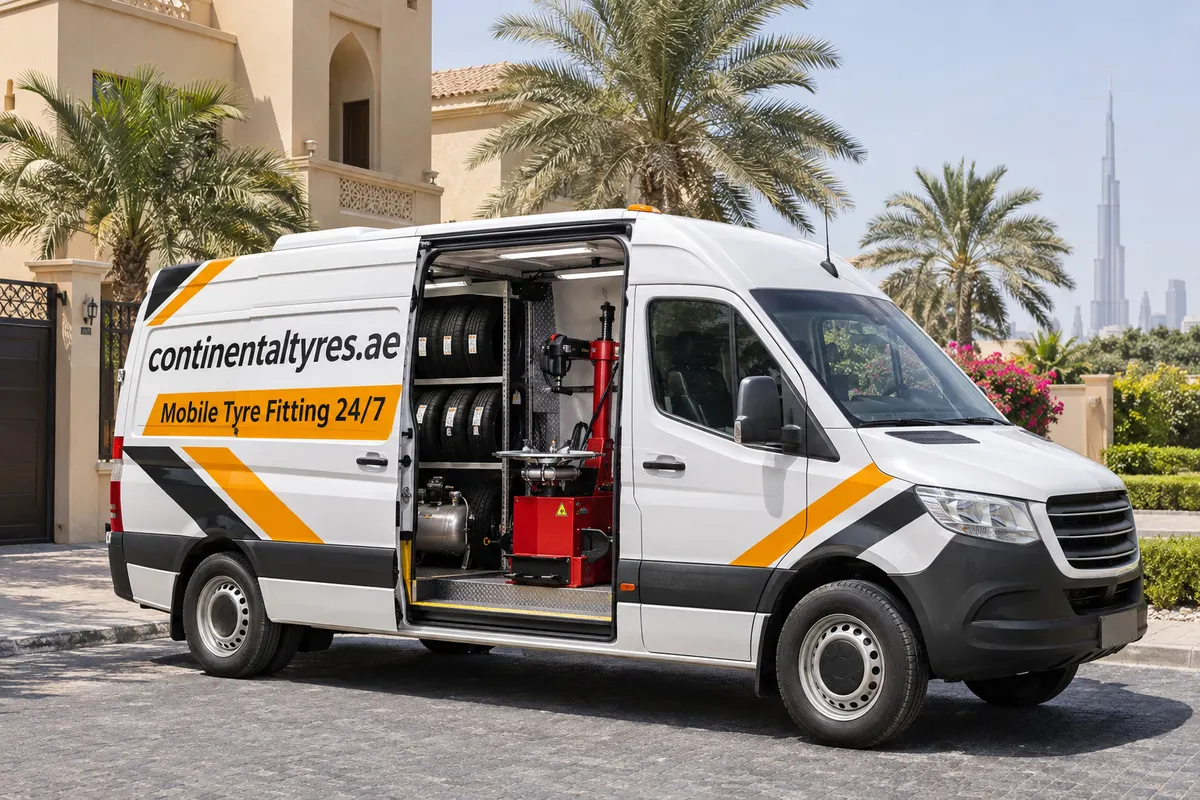
When we fit tyres at your home or office in Dubai, Abu Dhabi or Sharjah, I check the size, load index, speed rating, OE marking and DOT date of the existing tyres before suggesting what to buy. If the remaining tyres are too worn to pair with new ones on an AWD car, I will say so. A tyre replacement includes balancing, a new valve and pressure set to the door-placard value. If a damaged tyre is what started the question, my tyre damage guide helps decide whether it can be repaired.