Short answer
For most UAE drivers, no. The UAE has no real winter, and road surfaces reach 60–70°C in summer, which is exactly what a summer tyre is designed for. An all-season tyre uses a softer compound built to stay flexible in the cold, so in our heat it usually gives up some dry braking, steering precision and tread life.
Key takeaways
- Summer tyres are the standard Continental fitment in the UAE, and almost the whole regional catalogue is listed as summer.
- All-season compounds are tuned to stay soft in the cold, which works against them on 60–70°C summer asphalt.
- The trade-offs in UAE heat are usually faster wear and less sharp dry braking and handling.
- All-season tyres make sense if you regularly drive into cold countries or your car came with them from the factory.
- A few CrossContact RX SUV sizes appear as all-season in the regional catalogue, usually tied to specific vehicle fitments.
Every few weeks a customer asks me whether they should switch to all-season tyres, usually because they read a European review or because the car came from abroad with them fitted. In four years of fitting, repairing and inspecting tyres in Dubai, Abu Dhabi and Sharjah, my answer has stayed mostly the same: in this climate, an all-season tyre is solving a problem you do not have.
That said, there are a few real cases where an all-season tyre is the right call, and a few where it is the only tyre the car should wear. Below I explain how summer and all-season tyres differ, what that means on UAE roads, and how to decide for your own car.
What is the difference between all-season and summer tyres?
The main difference between all-season and summer tyres is the rubber compound and the tread pattern: a summer tyre is built for warm, dry and wet roads, while an all-season tyre is built to stay flexible and grip in cold, slush and light snow as well. Everything else follows from that one design choice.
Rubber hardens as it gets colder. A summer compound is designed to work at warm temperatures and becomes stiff in near-freezing weather, which is why European drivers swap to winter or all-season tyres in the colder months. Industry guidance commonly treats around 7°C as the point where summer tyres start to lose their edge. An all-season compound is mixed to stay softer below that point.
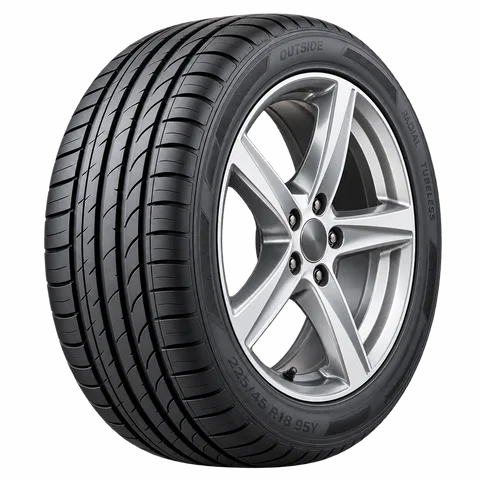
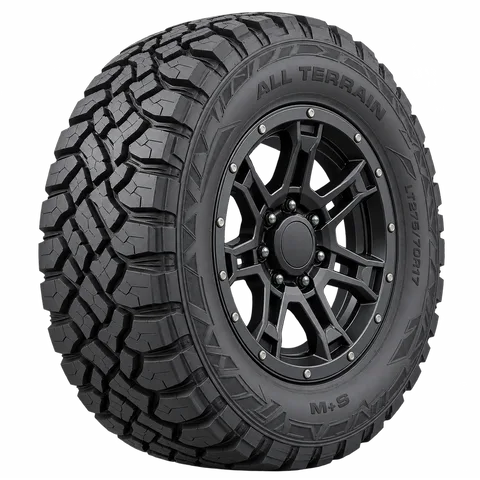
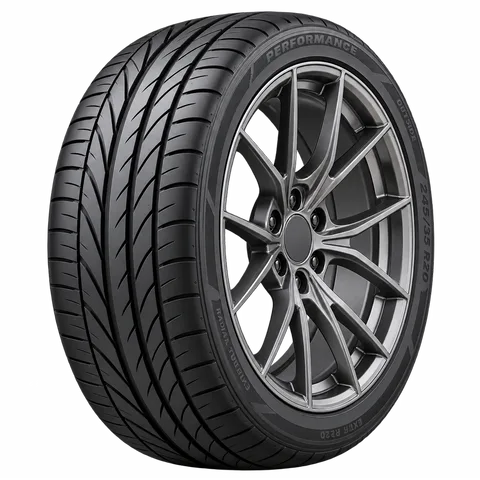
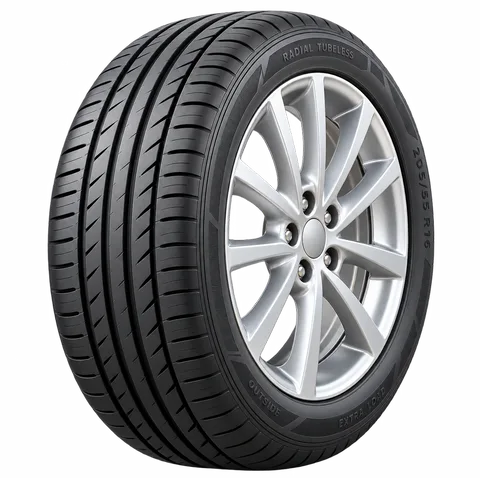
The tread pattern also changes. All-season tyres usually carry more sipes, the thin slits that bite into snow and slush, and a pattern that clears slush rather than just water. Many carry the M+S marking, and some carry the three-peak mountain snowflake symbol for proper winter ability. Summer tyres use larger, stiffer tread blocks that stay stable under hard braking and cornering on dry roads.
- Summer tyre: firmer compound, larger tread blocks, built for warm dry and wet roads
- All-season tyre: softer compound for cold, more sipes, often marked M+S
- Some all-season tyres carry the three-peak mountain snowflake symbol
- Neither type is better everywhere: each is designed for a different climate
Does the UAE need all-season tyres?
The UAE does not need all-season tyres for ordinary driving, because it has no cold season that affects tyre grip. Even in January, night temperatures on the coast in Dubai, Abu Dhabi and Sharjah stay well above the range where summer tyres lose grip, and there is no snow or ice on public roads.
The only places that get properly cold are high ground such as Jebel Jais, and even there the cold is brief and mostly at night. A normal summer tyre driven sensibly copes with a winter evening trip up the mountain.
What the UAE does have is extreme heat. From May to October the road surface regularly reaches 60–70°C in the afternoon, and a tyre running at 120–140 km/h on the E11 or E311 builds a lot of heat on top of that. That is the condition your tyre has to survive, and it is where summer tyres are strongest.
Rain is the other factor people raise. We get short, heavy downpours a few times a year, and standing water on roads that are not built to drain it quickly. A good summer tyre handles wet roads well; wet braking is one of the main things tyre makers test summer tyres for. I cover rain and sand conditions in more detail in my guide to driving in UAE rain, fog and sand.
What do you give up with all-season tyres in UAE heat?
In UAE heat, an all-season tyre usually gives up some tread life, some dry braking and some steering precision compared with a summer tyre of the same quality level. The softer compound that helps in the cold is working outside its comfort zone on hot asphalt.
I will not put numbers on it, because the gap depends on the exact tyres, sizes and car, and I have not seen independent tests run at Gulf summer temperatures. But the direction is consistent with what I see on the van: all-season tyres that came on imported cars tend to look more worn at the shoulders after a UAE summer than summer tyres of a similar age, and owners often describe the steering as a little softer.
Here is what I would expect when an all-season tyre spends a full year in the UAE:
- Faster wear, because a softer compound abrades more quickly on hot, rough asphalt
- Slightly longer dry braking at high temperatures, since the tread blocks move more
- Less sharp steering response at highway speed
- More heat build-up if the tyre is also run below the door-placard pressure
- No real benefit in return, because the cold-weather ability is never used
| Factor | Summer tyre in the UAE | All-season tyre in the UAE |
|---|---|---|
| Designed temperature range | Warm and hot roads, the UAE all year | Cold to mild, with some warm-weather ability |
| Behaviour on 60–70°C asphalt | Compound stays stable and firm | Softer compound works outside its ideal range |
| Dry braking and steering | Sharper, more stable blocks | Usually a little softer |
| Tread life in UAE heat | Normal for its category | Tends to wear faster |
| Wet roads after UAE rain | Good, wet grip is a core test area | Good, but no advantage in warm rain |
| Cold or snow abroad | Loses grip near freezing, not for snow | Usable, especially with the snowflake symbol |
| Who it suits | Almost every UAE driver | Drivers who travel to cold countries, or OE all-season fitments |
When do all-season tyres make sense for UAE drivers?
All-season tyres make sense in the UAE mainly for two groups: owners who regularly drive their car into cold-climate countries, and owners whose car was fitted with all-season tyres from the factory as its approved original equipment. For everyone else, a summer tyre is the better match.
The first group is small but real. A few customers drive to Europe or Central Asia in the winter months, or keep a car that spends part of the year somewhere cold. For them, an all-season tyre avoids having to carry or store a second set, and it is safer than arriving in sleet on summer tyres.
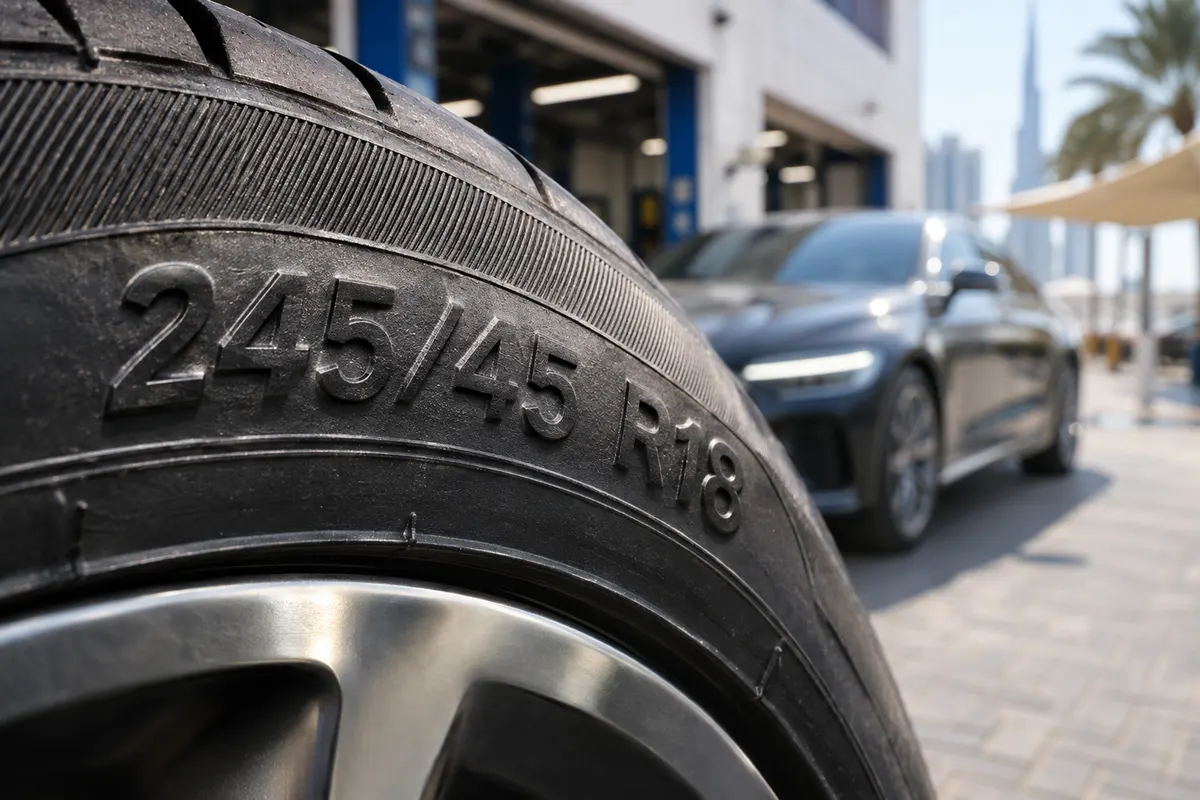
The second group matters more. Some SUVs are approved from the factory on all-season tyres in certain sizes, and the tyre carries an OE marking that matches the car's set-up. If your car came on an OE-marked all-season tyre, you can replace like for like, or move to a summer tyre with the same size, load index, speed rating and suitable approval. My guide to OE markings such as MO, star and AO explains what those codes mean before you change anything.
There is also a third, smaller case: imported cars that arrive with all-season tyres still fitted. If those tyres are fresh and in good condition, there is no need to throw them away. Run them at the correct pressure, check them through the summer, and switch to summer tyres when they are due.
Does Continental sell all-season tyres in the UAE?
Almost every Continental tyre listed for the UAE and wider Gulf market is a summer tyre, because that is what the climate calls for. Continental's dedicated all-season and winter lines are developed mainly for European and North American conditions and are not normally stocked here.
The main exception I come across is the CrossContact RX, which appears in the regional catalogue in some all-season sizes for heavy SUVs. Those are usually linked to specific vehicle fitments, so if you see one listed for your SUV it is worth checking whether it matches what the car was approved on.
For most cars, the summer lines are the sensible choice. On saloons I usually suggest the PremiumContact 7 for comfort and braking, or the UltraContact UC7 for value and durability. For family SUVs that live on tarmac, the CrossContact LX2 is quiet and long wearing. Our Continental SUV tyres page covers the larger sizes.
Are all-season tyres cheaper to run in the UAE?
All-season tyres are not usually cheaper to run in the UAE, because the softer compound tends to wear faster in our heat and you pay a similar price per tyre. The saving people expect, avoiding a second set, does not apply here since nobody in the UAE needs a winter set.
In practical terms, a Continental summer touring tyre typically costs around AED 420–650 in 17-inch and AED 520–850 in 18-inch, and SUV sizes cost more. Those are typical bands, and prices vary with size, load and speed rating, OE marking and stock. Our Continental tyres price guide for the UAE shows current ranges by rim size.
The real running cost comes from how long the tyre lasts. A summer tyre that is matched to the car and kept at the right pressure will usually last longer here than an all-season tyre of the same size. My article on how long Continental tyres last in the UAE explains what shortens tyre life on our roads.
How should I choose tyres for UAE weather?
The best tyre for UAE weather is a quality summer tyre in the correct size, load index and speed rating for your car, with a fresh DOT date and kept at the door-placard pressure. Those four things matter far more than the summer or all-season label.
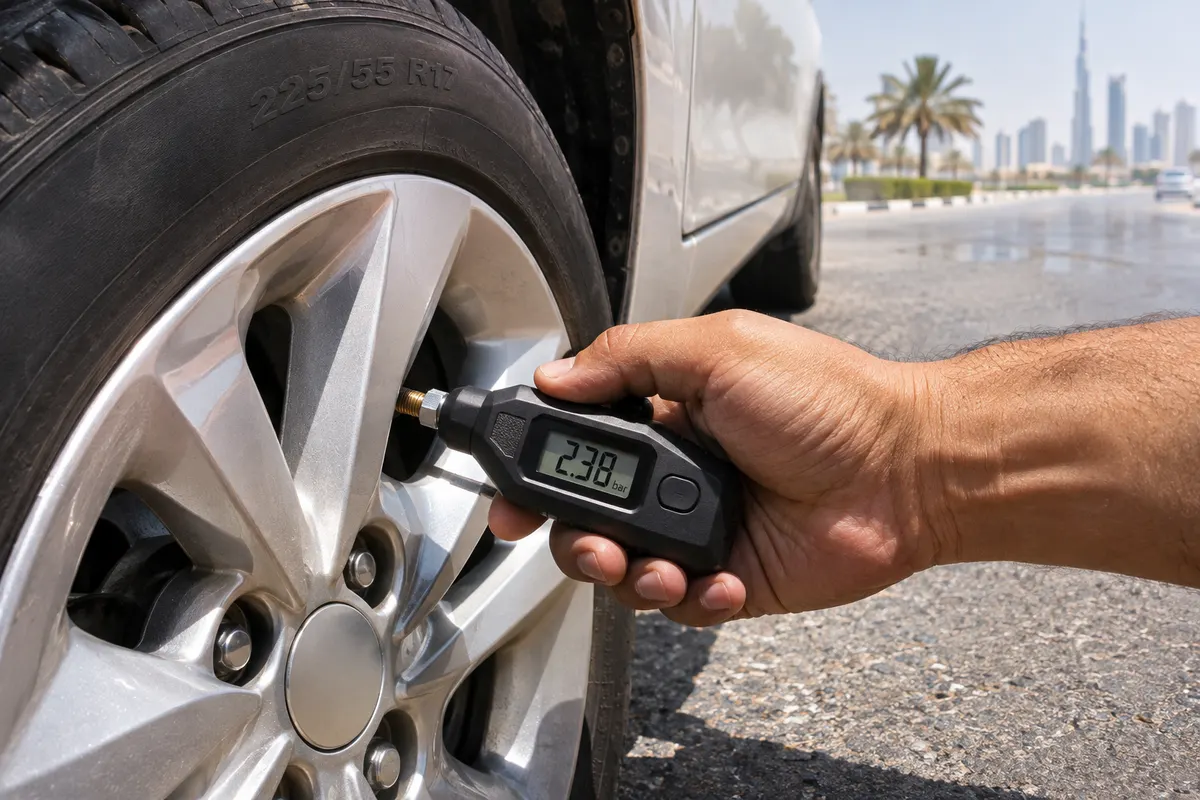
Load index and speed rating are the ones people skip. A heavy SUV or EV needs a tyre that can carry its weight at highway speed in 45°C air, so never fit a lower load index than the car came with. Pressure is the other big one: a tyre running 6–8 PSI low flexes, overheats and wears its shoulders, whatever type it is. My summer tyre pressure guide covers when and how to check.
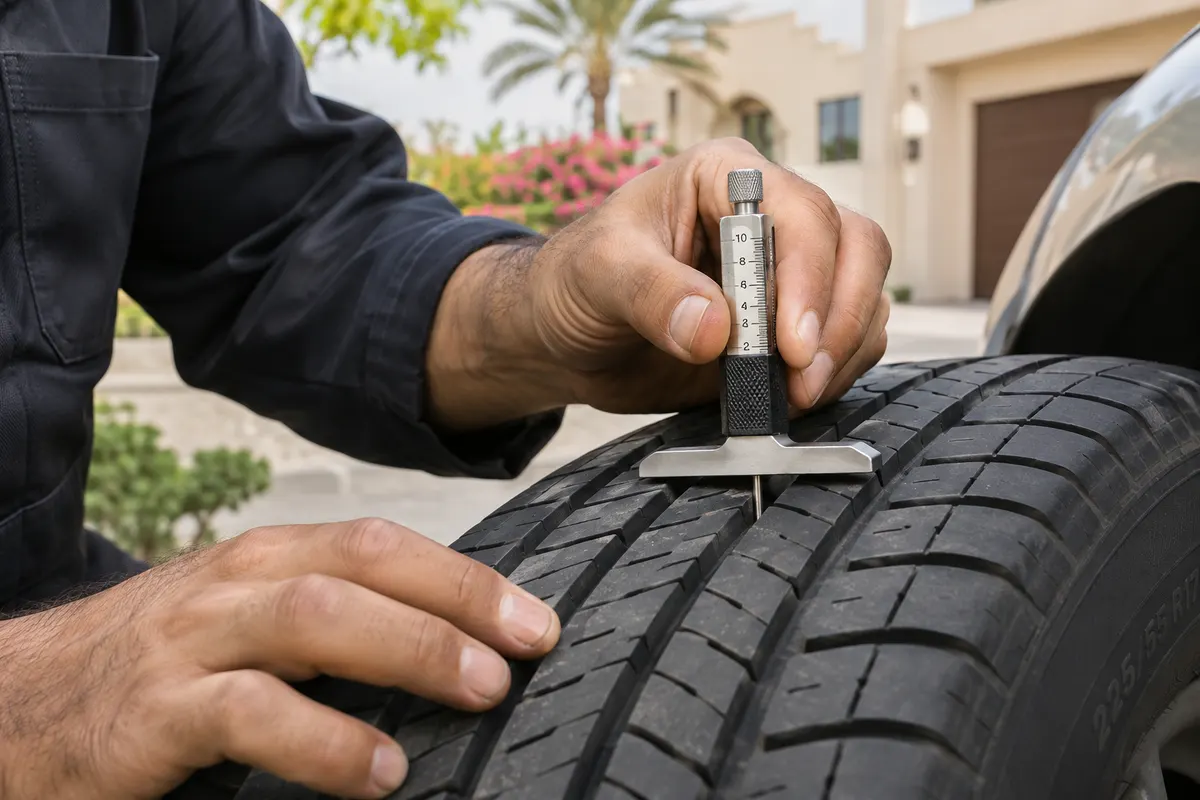
Finally, check the age. Tyres more than five years past their DOT date are commonly rejected at inspection, and an old tyre in UAE heat is a blowout risk regardless of tread depth. When we supply new tyres, I show the DOT code to the customer before fitting. If you drive an SUV, the SUV tyre guide lists common sizes and load ratings.
My verdict on all-season tyres in the UAE
My verdict is that all-season tyres are not worth it for the large majority of UAE drivers, because the climate never uses their cold-weather strengths and regularly punishes their softer compound. A summer tyre is the right default here.
If you drive to cold countries each winter, or your car was approved from the factory on an all-season fitment, an all-season tyre is a reasonable and sometimes necessary choice. In every other case, I would spend the money on a good summer tyre in the right size and rating.
If you are not sure what your car is on now, send us a photo of the sidewall and your car model. We will tell you whether it is summer or all-season, what the OE marking means, and suggest a couple of Continental options with typical prices.