Short answer
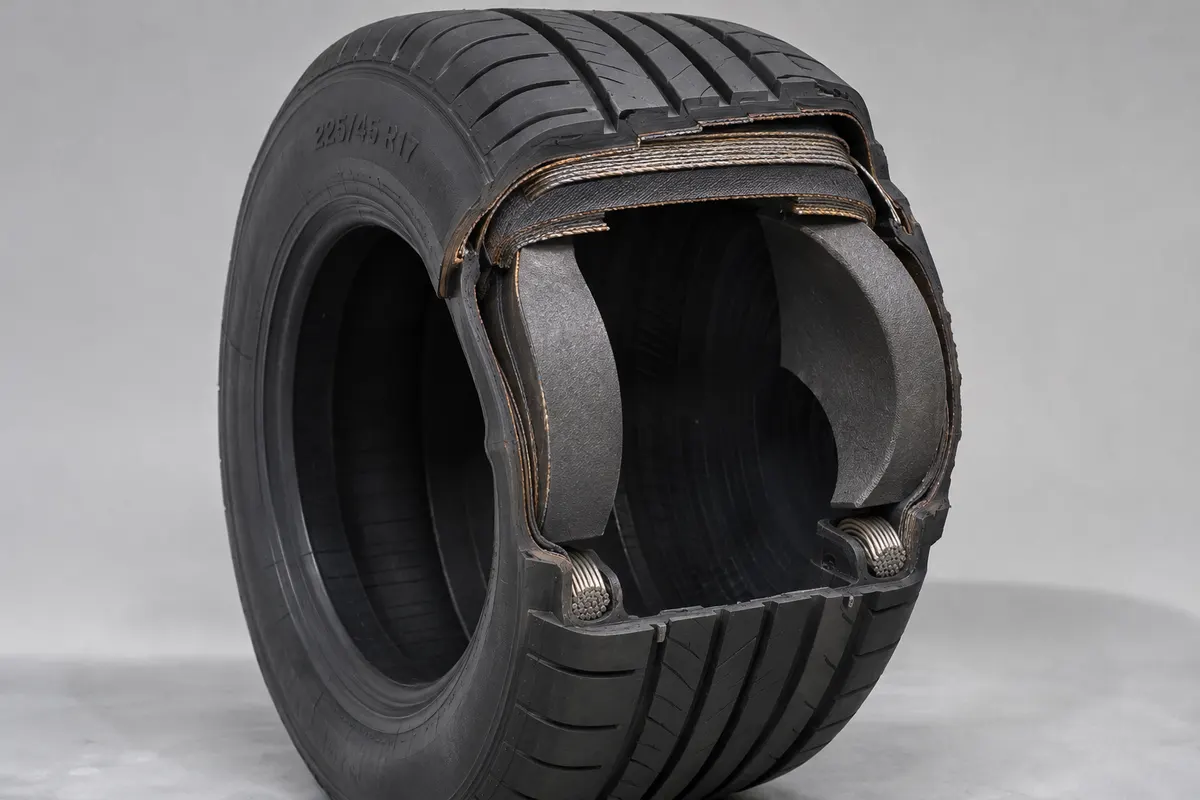
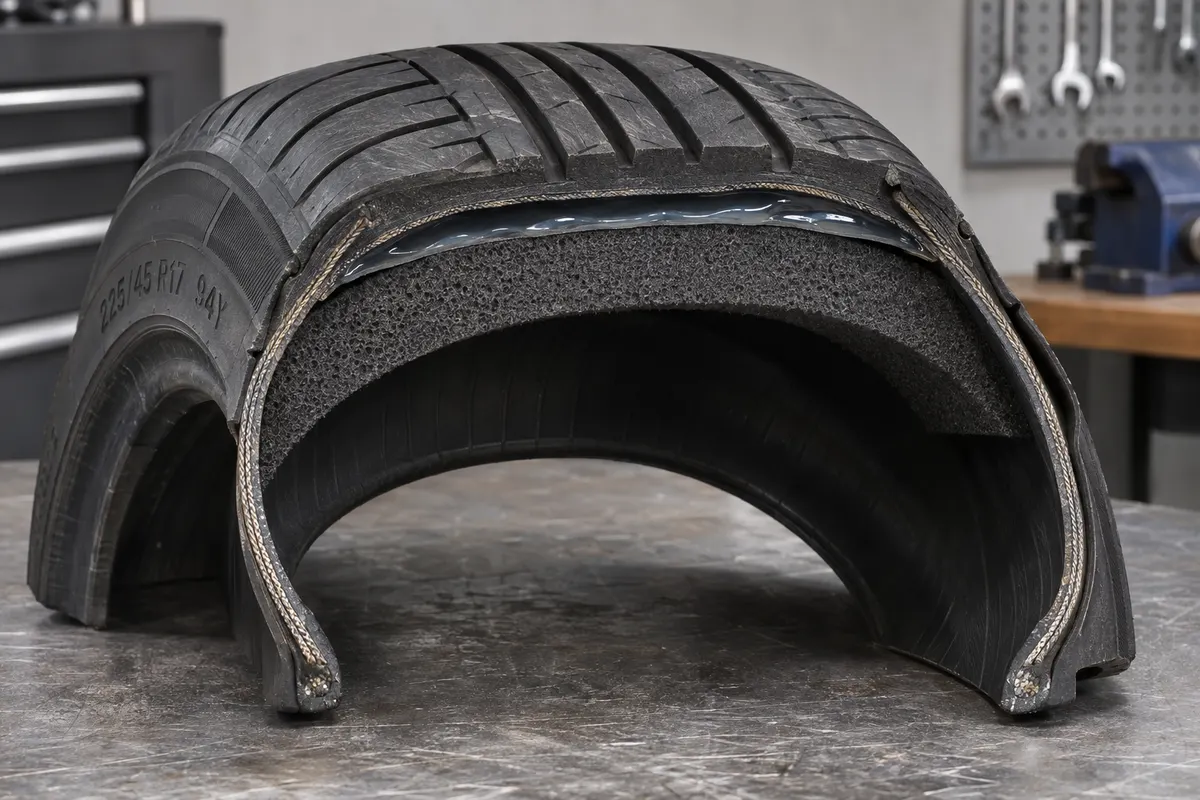
ContiSeal is a sticky sealant layer inside the tread that automatically seals most punctures from objects up to 5 mm in diameter, so air stays in. ContiSilent is a polyurethane foam layer bonded inside the tyre that absorbs cavity resonance and noticeably lowers cabin noise. Both sit on the inner liner and use standard rims.
Key takeaways
- ContiSeal seals most tread punctures up to 5 mm in diameter, and the car keeps its pressure.
- It does not protect the sidewall or shoulder, and larger cuts still need a new tyre.
- ContiSilent foam absorbs the hollow drumming noise from inside the tyre, which is most noticeable in quiet EVs and luxury cars.
- Both can be repaired by a technician who knows how to work around the sealant or foam.
- Avoid aerosol puncture sealants on foam-lined tyres; they soak into the foam.
Every week I remove a nail or screw from a tyre that the owner never knew was there. On ordinary tyres, the pressure warning usually gives it away. On ContiSeal tyres, the car often kept its pressure perfectly, and I only find the nail during a rotation or a routine check.
ContiSeal and ContiSilent are two of Continental's most useful technologies, but they are hidden inside the tyre and rarely explained at the point of sale. This post covers what each one does, the limits, and what I do differently when repairing or fitting them.
What is ContiSeal and how does it work?
ContiSeal is a layer of viscous sealant applied to the inner liner of the tyre behind the tread, which closes most punctures from objects up to 5 mm in diameter. When a nail or screw goes through the tread, the sealant wraps around it and keeps the air in. If the object later falls out, the sealant flows into the hole and closes it.
In day-to-day use this means a common puncture does not become a flat tyre. On the roads around Al Quoz, Mussafah and Sharjah industrial areas, where screws and metal off-cuts are common, that is a practical advantage. You keep driving, the pressure stays close to normal, and you deal with it at a convenient time.
The sealant is applied only across the tread area, not the shoulders or sidewalls. ContiSeal tyres mount on standard rims, balance normally and work with the car's existing TPMS. You can identify one by the ContiSeal marking on the sidewall.
The sealant is thick enough to stay in place at high speed and does not slosh around like an aerosol sealant. It is spread evenly at the factory, so the tyre balances normally. You will not feel it in the steering or hear it in the cabin.
- Seals: most tread punctures from objects up to 5 mm in diameter.
- Does not seal: sidewall damage, shoulder punctures, cuts and tears.
- Needs: no special rim or equipment for normal driving.
What is ContiSilent and does it really reduce noise?
ContiSilent is a layer of polyurethane foam bonded to the inside of the tread, and it noticeably reduces the hollow, drumming noise that the air cavity inside a tyre creates on rough surfaces. Without it, the air inside the tyre resonates like a drum when the tread rolls over joints and coarse asphalt.
The effect depends on the car. In a petrol SUV, engine and wind noise mask much of the tyre cavity sound, so the change is modest. In a quiet electric car or a well-insulated luxury saloon, which is why it features so often in my guide to Continental tyres for electric cars, the drumming becomes the loudest sound in the cabin on certain roads, and that is where ContiSilent makes the clearest difference.
You will find it on selected sizes of the PremiumContact 7, SportContact 7 and EcoContact 6, often on factory fitments for EVs and premium brands. The sidewall carries a ContiSilent marking. The foam does not affect fitting on standard rims, and rolling resistance and grip are not meaningfully changed.
Continental publishes its own noise reduction figures for ContiSilent, but the result you hear depends on the car and the road surface. On the coarse asphalt sections of some older Sharjah and Ajman roads, owners of foam-lined tyres tell me the difference is obvious. On smooth new tarmac it is subtle.
Can a ContiSeal tyre be repaired after a puncture?
Yes, a ContiSeal tyre can be repaired, and Continental's guidance is that a sealed puncture should still be checked by a tyre technician. The sealant is a self-sealing layer, not a permanent repair method for every case, and an inspection confirms there is no hidden damage to the casing.
When I repair a ContiSeal tyre, I remove it from the rim, find the puncture from the inside, and clean away the sealant around the hole before fitting a plug-patch. If the sealant is not cleaned properly, the patch will not bond. This takes a few extra minutes compared with a normal tyre, so I always ask customers to tell me if the sidewall says ContiSeal.
Many ContiSeal punctures can simply be left with the object removed, because the sealant has already closed the hole. I still prefer a proper inspection, especially before a long drive to Oman or Al Ain. Our puncture repair service covers both standard and ContiSeal tyres.
The same repair limits apply as on any tyre. The puncture must be in the central tread area, the hole must be within repairable size, and the tyre must not have been driven while badly underinflated. If any of those fail, I recommend a replacement, even if the sealant is currently holding the air.
- Tell your fitter the tyre has ContiSeal before the repair starts.
- The repair area must be cleaned of sealant for a patch to bond.
- Shoulder and sidewall damage cannot be repaired on any tyre.
How are ContiSilent tyres repaired?
ContiSilent tyres can be repaired, but the technician has to cut a small section of foam away from the puncture before patching. The foam is bonded to the inner liner, so a patch cannot be applied over it.
I remove a small square of foam around the hole, prepare the liner and fit the plug-patch in the normal way. The missing section is small enough that it does not affect balance or noise in any way you can notice. Done correctly, the repair is as strong as a repair on a standard tyre.
The mistake to avoid is using an aerosol puncture sealant or the liquid kit some cars carry instead of a spare. On a foam-lined tyre, the liquid soaks into the foam, adds weight unevenly and makes a later repair much harder to clean. If your car has ContiSilent tyres and a sealant kit, I suggest using the compressor only to top up air and get to a safe place, and calling a fitter rather than injecting sealant.
Is ContiSeal better than a run-flat tyre?
ContiSeal and run-flat tyres solve different problems, so neither is better in every case. ContiSeal prevents air from leaving after a small tread puncture, while an SSR run-flat lets you keep driving after the air has already gone.
ContiSeal keeps the normal ride comfort of a standard tyre, because the sidewalls are not reinforced. That is why many owners of cars with no spare wheel, including several EVs, appreciate it. The limit is the size and location of the damage. A large cut, a sidewall impact on a kerb or a blowout will still leave a ContiSeal tyre flat.
An SSR run-flat covers those bigger failures by carrying the car's weight on its sidewalls, at the cost of a firmer ride and a strict replacement rule if driven flat. If you want to compare in detail, read my explanation of Continental SSR run-flat tyres. The right choice usually follows what the car was designed for.
For a car that came with neither, ContiSeal is a sensible upgrade in sizes where it is offered, because it adds puncture protection without changing the ride. I would not fit run-flats to a car that was not designed for them, as the suspension and TPMS may not suit.
- ContiSeal: stops small tread punctures, normal comfort.
- SSR run-flat: keeps you moving after full pressure loss, firmer ride.
- Neither protects against every type of damage.
Do ContiSeal and ContiSilent cope with UAE heat?
Yes, both ContiSeal and ContiSilent are designed to work across the full temperature range a tyre sees in service, including UAE summers. The sealant and foam are inside the tyre, where temperatures depend mainly on pressure, load and speed rather than the air outside.
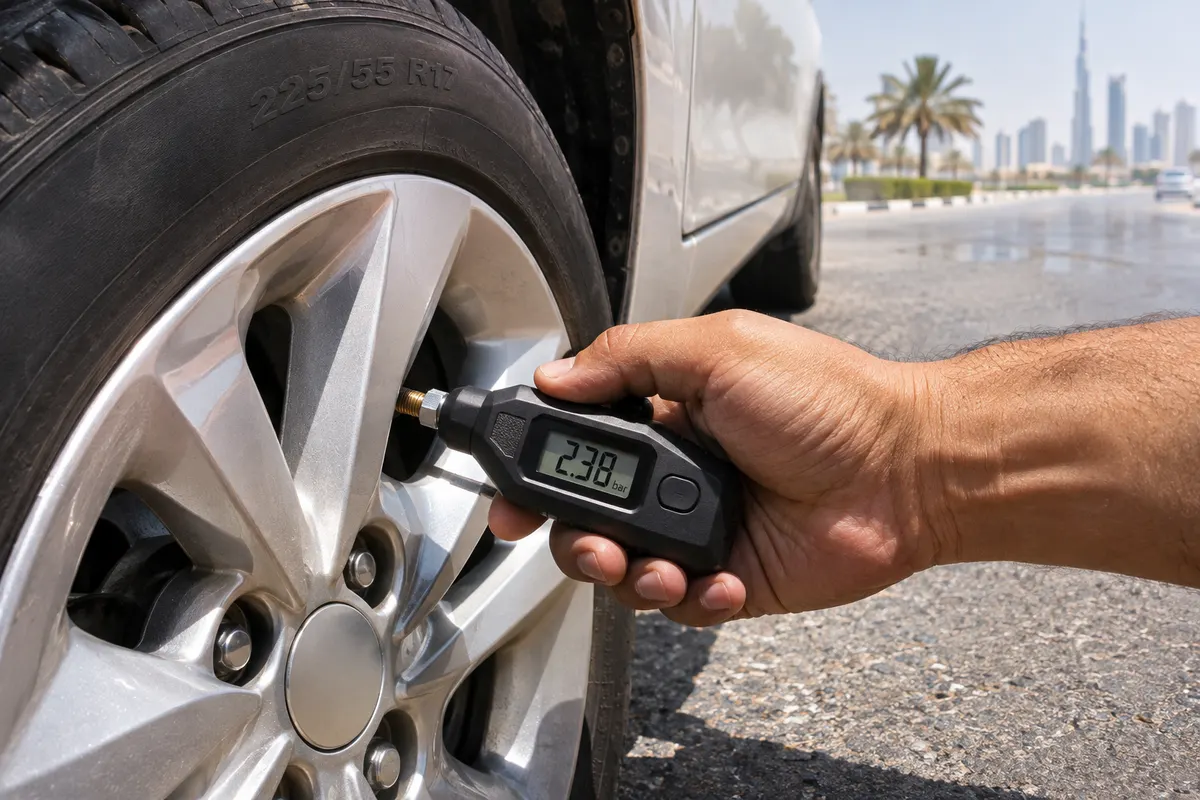
The heat issue I watch for is the same as any tyre: underinflation. A tyre that runs 6 to 8 PSI low on a 65°C road builds heat in the shoulders and sidewall. ContiSeal cannot help with that, because it is not a puncture problem. Keeping pressure at the placard value cold is what protects the tyre.
I also find that ContiSeal can hide a slow pressure loss from a puncture at the very edge of the sealed area. If your TPMS shows one tyre dropping 1 to 2 PSI a week, ask for it to be checked. My summer tyre pressure guide explains how to check correctly in the heat.
Are ContiSeal and ContiSilent tyres worth paying more for?
ContiSeal and ContiSilent are worth it when they match a real need, such as a car with no spare wheel, an electric car or a luxury cabin where tyre noise stands out. For many drivers they are simply part of the factory fitment, and staying with the same specification keeps the car as the maker intended.
Price differences depend on the size and range. On common 18 to 20 inch sizes, the versions with these technologies usually cost a little more than the standard tyre where both exist, and in some EV sizes only the ContiSilent version is made. We confirm current prices on WhatsApp, and our Continental EV and Tesla tyres page lists sizes where ContiSilent is common.
If your current tyres have either marking, I recommend replacing like for like. Switching a Tesla or a Mercedes EQ from ContiSilent to a standard tyre is one of the quickest ways to make an expensive car sound cheaper inside.
What should you tell your fitter about ContiSeal and ContiSilent tyres?
Tell your fitter before any work starts that your tyres have ContiSeal or ContiSilent, because both change how a repair is done and a few fitting details. Most problems I see with these tyres come from someone treating them as a standard tyre.
With ContiSeal, the main risk is a poor repair. If the sealant is not cleaned from the repair area, the patch can lift after a few hundred kilometres and the tyre starts losing air again. With ContiSilent, the risk is damage to the foam from tyre levers during mounting, or a patch fitted over foam that was never cut back. Neither tyre needs special equipment, but both need care.
On TPMS cars, the sensor sits on the rim inside the tyre. ContiSeal sealant is applied only to the tread area, so it does not reach the sensor in normal use. Liquid sealant from a can is different and can clog a sensor, which is another reason I avoid it on any modern car.
When you replace these tyres, the old ones go for disposal like any other tyre. Fitting is the same price as a standard tyre with our mobile service, from AED 100 per visit, including balancing, a new valve and the pressure set to the placard value.
- Mention ContiSeal or ContiSilent when booking.
- Ask how the repair area will be prepared.
- Avoid aerosol sealants, especially on TPMS cars.