Short answer
Continental and Pirelli are both premium brands. Pirelli is strongest in high-performance and supercar fitments, with the P Zero as its flagship. Continental generally offers excellent braking, steering precision and good comfort across a wider everyday range. For most UAE sedans and SUVs Continental is a very strong pick; for some supercars, Pirelli is the factory standard.
Key takeaways
- Pirelli, founded in Milan in 1872, is the leading OE tyre for many supercars and is F1's tyre supplier.
- Continental, founded in Hanover in 1871, is strong in braking, handling and everyday comfort.
- Compare SportContact 7 vs P Zero, PremiumContact 7 vs Cinturato P7, CrossContact vs Scorpion.
- On cars with a specific OE marking, staying with the marked tyre is usually the right call.
- For daily UAE driving, comfort, wet grip and heat resistance matter more than lap times.
The Continental versus Pirelli question usually comes up from owners of fast cars. A customer with an AMG, a Porsche Macan or a BMW M car is standing next to me in a car park in Jumeirah, looking at worn tyres, and wondering whether to go back to what the car came on or try something different.
In four years of fitting tyres in the UAE I have mounted plenty of both on everything from hatchbacks to supercars. We sell only Continental, but Pirelli makes outstanding performance tyres and I will say so plainly. Here is how the two compare where it counts for UAE drivers.
Is Continental better than Pirelli?
Continental is not universally better than Pirelli, and the reverse is also true: Pirelli leads in the supercar and high-performance image, while Continental is often stronger in braking, comfort and everyday versatility. Which is better depends on the car and how it is driven.
Pirelli was founded in Milan, Italy, in 1872, and has built its brand around motorsport. It is the sole tyre supplier to Formula 1 and the factory fit on many Ferrari, Lamborghini and Maserati models. Continental, founded in Hanover in 1871, has a broad original equipment presence on German cars, from Volkswagens to Porsches and Mercedes-AMG models.
For most cars on UAE roads, both brands offer excellent options. The question to ask is not which brand is better but which model is better for your car, your size and your driving.
It is worth being clear about what the motorsport image does and does not mean. Formula 1 tyres are a completely different product from road tyres, and the link is mostly about brand and engineering culture. On a road car in Dubai traffic, what counts is braking on a dusty surface, stability at 130 km/h, heat resistance, comfort over speed bumps and how long the tyre lasts. Both brands are strong on those points; they simply weigh them a little differently.
SportContact 7 vs Pirelli P Zero: which is better?
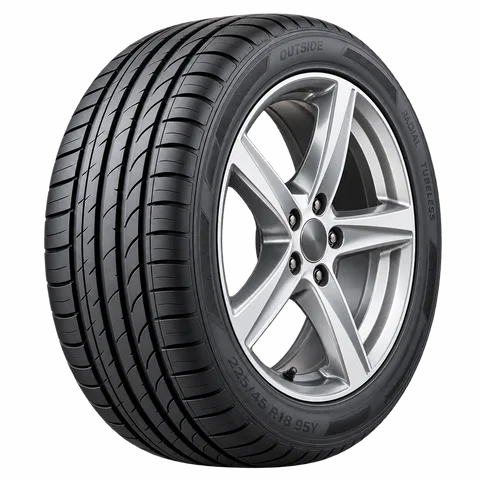
The Continental SportContact 7 and the Pirelli P Zero are both elite ultra-high performance tyres, and the right pick depends on whether you value wet grip and steering feel or a specific factory fitment. The SportContact 7, launched in 2021, has a strong reputation in both dry and wet conditions and gives very precise steering.
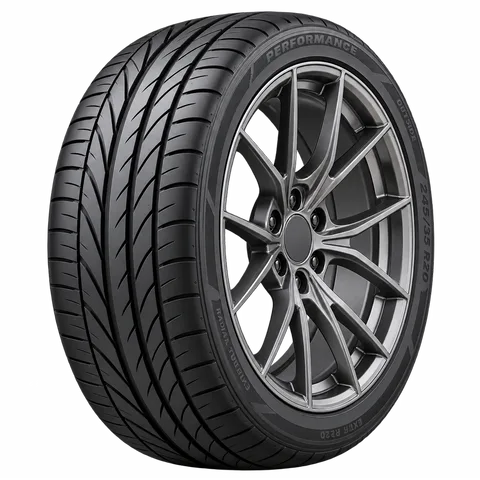
The P Zero is Pirelli's flagship and comes in many manufacturer-specific versions, with markings for brands such as Porsche, Ferrari, Mercedes-Benz and BMW. On supercars, the car's chassis is often tuned around a particular P Zero, and swapping to a different tyre can change how the car feels.
On German performance cars the picture is more balanced. Porsche, Mercedes-AMG and BMW M models are often homologated on both brands, with an N-marked, MO-marked or star-marked version of each. In that case either is a factory-approved choice, and I suggest picking on price, availability in your size and whether you prefer Continental's wet-weather confidence or the specific feel of the P Zero. In UAE summers, a sports tyre that keeps its composure on hot tarmac without going greasy matters more than ultimate track grip.
Pirelli also offers track-focused tyres such as the P Zero Trofeo, but semi-slick tyres like that are built for track days, not daily driving in 45°C traffic. Our SportContact tyres in Dubai page lists typical sizes and prices for performance cars.
PremiumContact 7 vs Pirelli Cinturato P7: which is better for sedans?
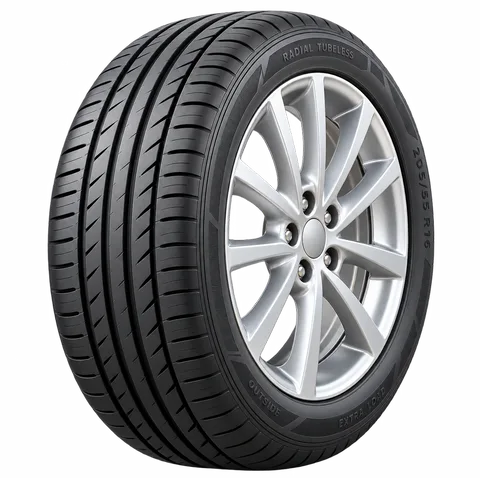
For premium sedans driven mainly on highways and in the city, the Continental PremiumContact 7 is my first suggestion, with the Pirelli Cinturato P7 as a capable alternative. Both are premium touring tyres aimed at comfort, efficiency and safe braking.
The PremiumContact 7 is known for balanced handling and strong wet and dry braking, and it feels stable at the 120–140 km/h speeds we see on the E11. The Cinturato P7, which Pirelli renewed in recent years, focuses on comfort, low rolling resistance and wet safety, and is a common factory fit on European cars.
On a daily commuter between Dubai and Abu Dhabi, that difference in emphasis is what you will notice. The PremiumContact 7 tends to feel a little more planted in fast lane changes, while the Cinturato P7 often feels softer and more relaxed over rough surfaces. Neither is a wrong answer. If your sedan is a Mercedes-Benz E-Class or BMW 5 Series, check the OE marking on your current tyres and choose the matching marked version from whichever brand you prefer.
Both brands offer run-flat versions for cars such as BMW that ship without a spare. Continental calls its system SSR; Pirelli uses Run Flat. Both ride firmer than standard tyres, which is normal. My guide to Continental SSR run-flat tyres explains how they work and when they can be repaired.
| Category | Continental model | Pirelli model | Notes |
|---|---|---|---|
| Ultra-high performance | SportContact 7 | P Zero | Both elite; P Zero is the factory fit on many supercars, SportContact 7 known for wet grip and steering |
| Premium touring | PremiumContact 7 | Cinturato P7 | Both comfortable and efficient; Continental leans to braking and handling |
| Performance SUV | CrossContact RX, ContiCrossContact UHP | Scorpion Zero / Scorpion | For Cayenne, X5, GLE, Range Rover Sport |
| Comfort SUV | CrossContact LX2 | Scorpion Verde | Quiet highway tyres for family SUVs |
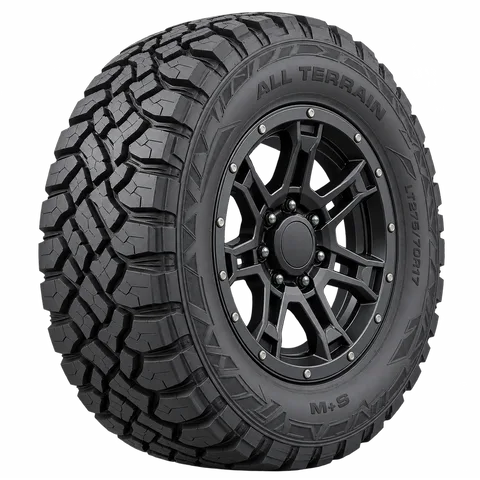
| All-terrain 4x4 | TerrainContact A/T, CrossContact ATR | Scorpion All Terrain Plus | For gravel, sand and mixed use |
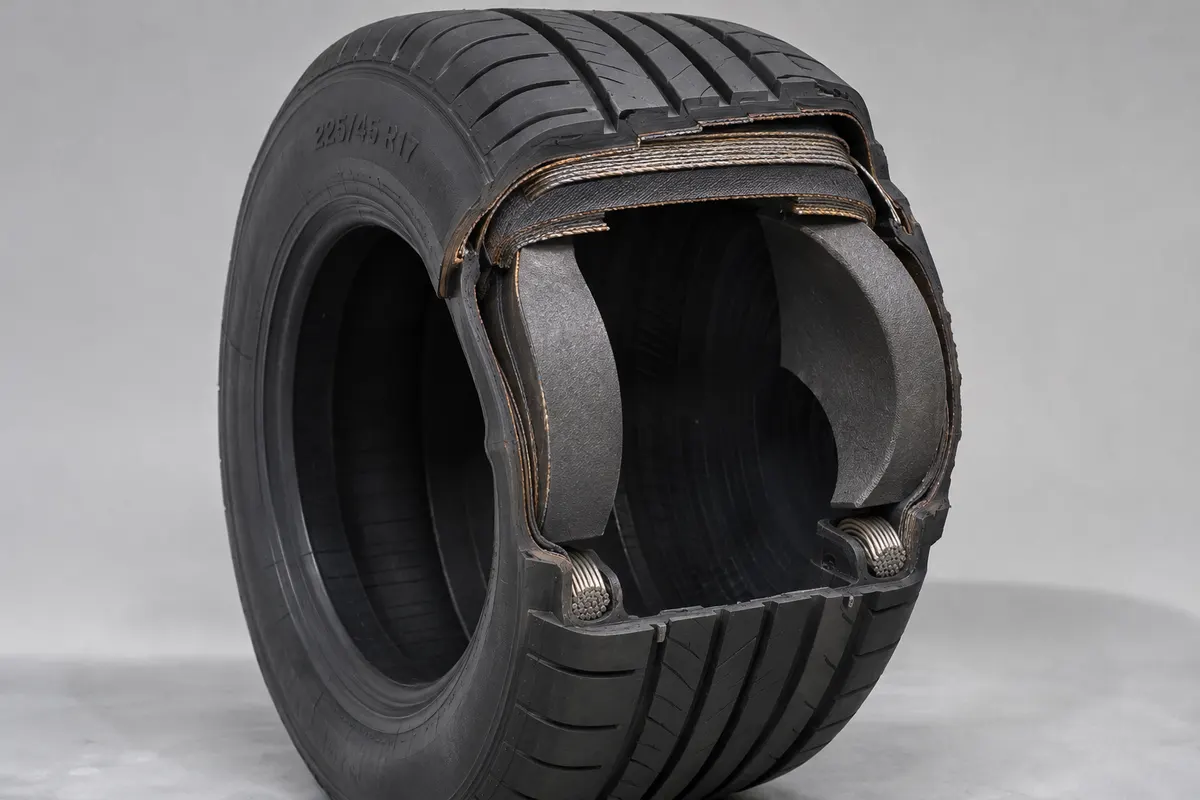
| Noise reduction tech | ContiSilent (selected sizes) | PNCS (selected sizes) | Foam inside the tyre to cut cabin noise |
| Run-flat | SSR | Run Flat | Both ride firmer than standard tyres |
CrossContact vs Pirelli Scorpion: which is better for SUVs?
For SUVs, both brands have strong ranges, and the choice depends on whether your SUV is built for speed, comfort or off-road use. Pirelli's Scorpion family covers performance SUVs with the Scorpion Zero and Scorpion, comfort with the Scorpion Verde, and off-road with the Scorpion All Terrain Plus.
Continental's CrossContact RX and ContiCrossContact UHP serve fast SUVs such as the Cayenne, X5 and GLE. The CrossContact LX2 is a quiet, long-wearing highway tyre for family SUVs, and the TerrainContact A/T and CrossContact ATR cover desert and gravel driving.
On heavy SUVs in UAE heat, I pay most attention to load index and sidewall strength. Speed bumps, steep basement ramps and long hot highway runs all stress a big SUV tyre. Both brands build their SUV tyres to handle that when the correct load rating is fitted.
If you take an SUV onto sand, remember that a highway or performance SUV tyre is not designed for low pressures. Dropping a Scorpion Zero or a CrossContact RX to 15 PSI for the dunes risks sidewall damage. For regular desert trips, an all-terrain tyre is the safer choice, and I always remind customers to reinflate before rejoining the highway. See our SUV tyre guide for common sizes.
Which is quieter and more comfortable in daily driving?
Continental often has a slight edge in everyday comfort and quietness, particularly with ContiSilent foam in selected sizes, but Pirelli's touring tyres are also refined. In ultra-high performance sizes, both brands ride firmly, because stiff sidewalls are what give a sports tyre its precision.
Pirelli's equivalent of ContiSilent is PNCS, a noise-cancelling foam layer fitted in selected sizes. Both systems reduce the hollow drumming noise that big low-profile tyres make on concrete and expansion joints, which is especially noticeable in electric cars.
A tip from the van: many comfort complaints I hear are really about pressure. A tyre set 5 PSI above the door-placard value rides harsher on Dubai's speed bumps. Set it to the placard, cold, and recheck in summer.
Rim size plays a part as well. A car on 21- or 22-inch wheels with 30- or 35-profile tyres will always ride more firmly than the same car on 19s, whatever the brand. If comfort is your top priority and your car offers a smaller approved wheel and tyre size, that change often makes more difference than switching from one premium brand to another.
Which lasts longer, Continental or Pirelli?
Tread life between Continental and Pirelli depends heavily on the category: touring tyres from both brands last well, while ultra-high performance tyres from both brands wear faster. A P Zero and a SportContact 7 on a 500 hp car driven hard will both need replacing sooner than a touring tyre on a family sedan.
In the UAE, the factors I see shortening tyre life most are underinflation in summer, misaligned wheels, and aggressive launches on powerful cars. Heat accelerates all three. Regular pressure checks, an alignment after any big kerb strike, and rotation where the car allows it will make far more difference than switching brands.
Also watch the age. Even unused tyres harden over time, and tyres more than five years past their DOT date are commonly rejected at inspection.
- Check pressure cold every two weeks in summer
- Get alignment checked after potholes or kerb strikes
- Avoid repeated full-throttle launches if you want your tyres to last
- Do not fit tyres that are already two or three years old
Who should choose Continental, and who should choose Pirelli?
Choose Pirelli if your car is a supercar or high-end performance car that came on a marked P Zero and you want the exact handling the factory intended. Choose Continental if you want excellent braking, steering precision and everyday comfort on a sedan, SUV or performance car, especially a German one that came on Continental.
- Ferrari, Lamborghini, Maserati with Pirelli OE marking: stay with the marked Pirelli
- Porsche, AMG or M car: the marked SportContact 7 and the marked P Zero are both excellent; match the OE marking
- Premium sedan used on highways: Continental PremiumContact 7 is my first choice; Cinturato P7 is a capable rival
- Family SUV: Continental CrossContact LX2 for comfort and life; Pirelli Scorpion Verde is a strong alternative
- Desert and gravel: Continental TerrainContact A/T or Pirelli Scorpion All Terrain Plus, chosen by size
My verdict after four years of fitting both
My verdict is that Pirelli deserves its performance reputation and Continental deserves its reputation for braking and all-round ability, and for the vast majority of UAE drivers Continental is the more versatile choice. On marked supercar fitments, follow the OE marking.
Whatever you choose, the basics decide how good your tyres will be in practice. Buy fresh stock, check the DOT code before fitting, match or exceed the original load index and speed rating, keep the same model on each axle and set pressures cold to the door placard. Those steps matter more on a 600 hp car in 45°C heat than any brand debate.
If you are weighing up the other big names too, read Continental vs Michelin and my review of the Continental SportContact 7.