Short answer
The Continental SportContact 7 is an ultra-high performance summer tyre launched in 2021 for sports cars and powerful sedans on 18 to 24 inch rims. In the UAE it gives excellent dry grip and steering precision and copes well with heat, but expect 20,000 to 35,000 km of life and prices from around AED 750 per tyre.
Key takeaways
- The SportContact 7 replaced the SportContact 6 as Continental's flagship road performance tyre, launched in September 2021.
- Dry grip, braking and steering feel are its strengths; it suits UAE heat well as a summer tyre used all year.
- Tread life is shorter than a touring tyre, typically 20,000 to 35,000 km in the UAE, and less on rear axles of powerful RWD cars.
- Typical UAE prices run from around AED 750 to 1,100 at 18 inch up to AED 1,400 to 2,400 at 21 to 22 inch.
Most of the SportContact 7 tyres I fit go on cars that would embarrass a tyre that was not up to the job: Porsches, AMG and M cars, fast Audis and the occasional modified sedan. The common question from owners is whether it is worth the extra over a premium touring tyre, and whether it is too soft for UAE summer.
This review is based on fitting, inspecting and replacing these tyres in Dubai, Abu Dhabi and Sharjah, plus Continental's published information. I have not run lab tests, so I will stick to what I see on the cars and what the specifications say.
What is the Continental SportContact 7?
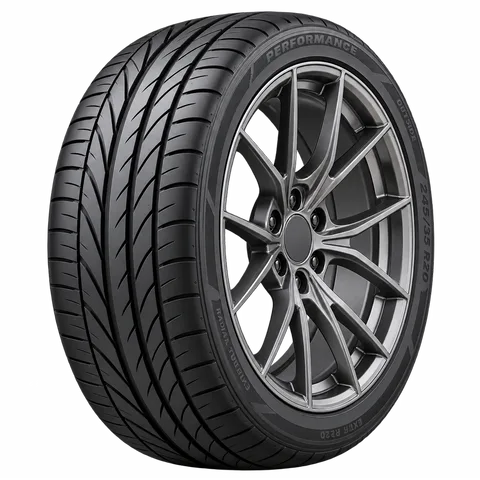
The SportContact 7 is Continental's ultra-high performance summer tyre for road cars, launched in September 2021 as the successor to the SportContact 6. At launch it came in 42 sizes from 19 to 23 inches, and the range has since grown to cover roughly 18 to 24 inch rims.
It is aimed at sports cars, performance sedans and fast SUVs where grip and steering precision matter more than maximum tread life. Most sizes carry high speed ratings, Y or (Y), and several sizes are produced with car maker OE markings for specific models, so it is worth checking the sidewall if your car needs one.
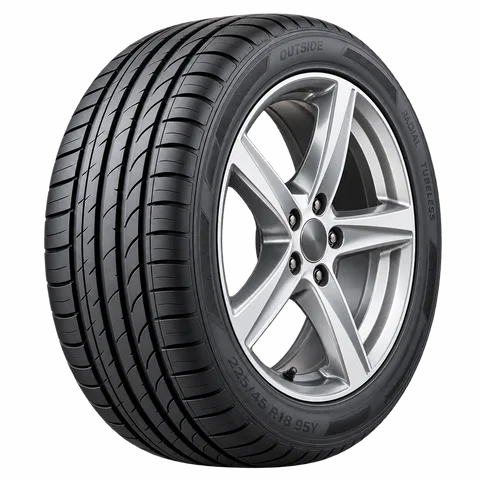
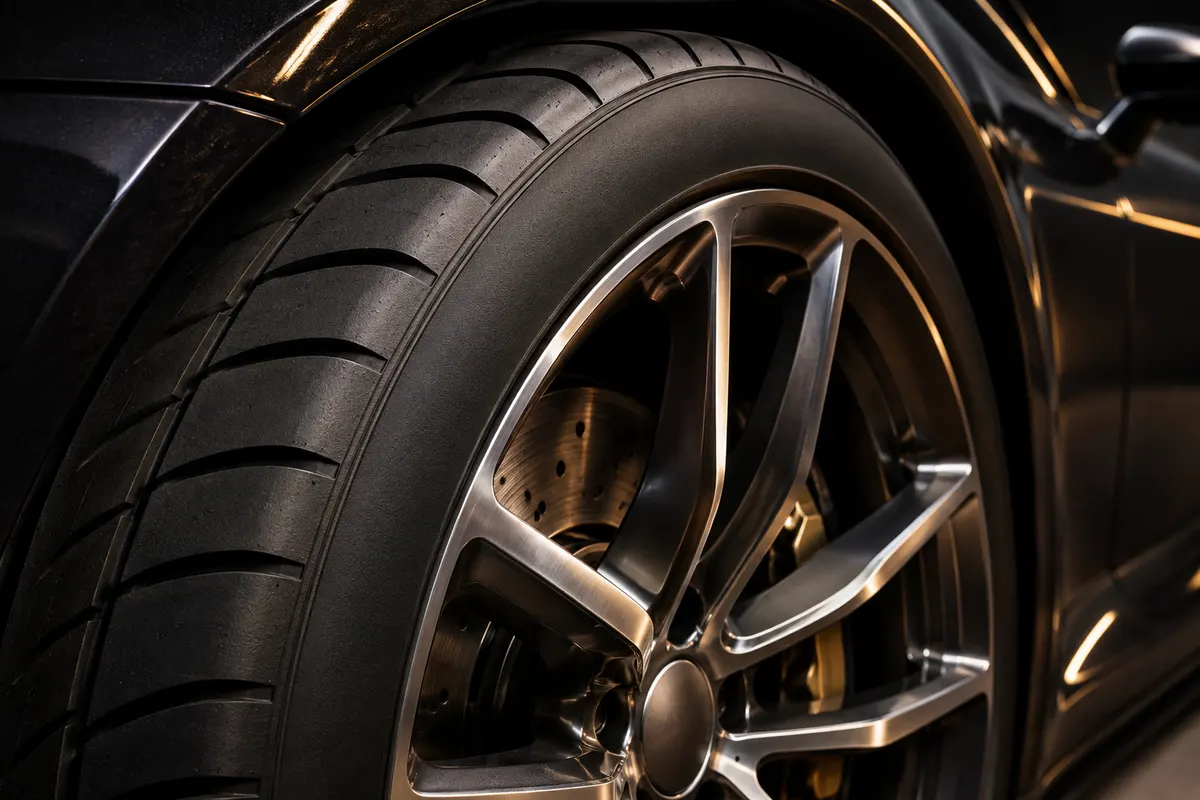
The tread is asymmetric, with different designs on the inner and outer halves, so it must be mounted with the side marked outside facing out. It is not directional, so on cars with the same size front and rear it can be rotated between axles.
Continental describes it as using a tread pattern and compound designed to adapt to dry and wet surfaces, with improved mileage compared with the SportContact 6. In UAE terms, "summer tyre" simply means it is designed for temperatures above about 7°C, which describes every day of the year here.
How does the SportContact 7 grip in UAE heat?
Dry grip is the SportContact 7's biggest strength, and it holds up well on hot UAE roads because it is a summer compound designed to work at high temperatures. On road surfaces at 60 to 70°C it does not feel greasy or vague the way some softer tyres can when they overheat.
Owners I fit it for usually comment on two things: how quickly the car responds to the steering wheel, and how well it stops. Braking from motorway speeds on the E11 or E311 is where a good UHP tyre earns its money, and this one feels very planted.
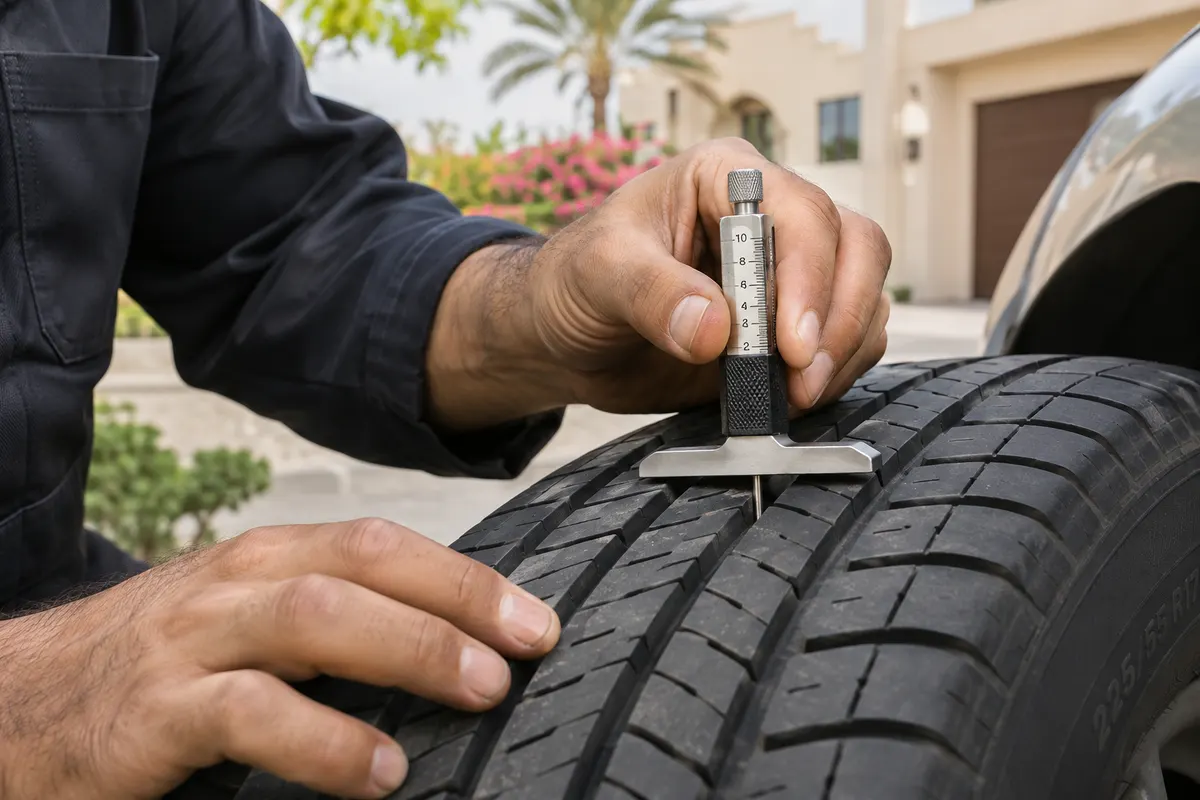
Wet roads are rare here, but the first rain after a dry spell leaves an oily, sandy film on the surface. The SportContact 7 drains water well while the tread is deep. As it wears below about 4 mm, I would treat sudden rain with more respect, as with any performance tyre.
One caution: no road tyre grips well on sand blown across the road surface. Grip drops quickly on sand-dusted bends near the desert roads, whatever the tyre.
Heat management on long runs matters too. A car doing Dubai to Abu Dhabi at 140 km/h in August puts real heat into its tyres. On the SportContact 7, as on any UHP tyre, the key is pressure: set it cold to the placard value, which on many performance cars has a separate higher figure for sustained high speed, and check it monthly. An under-inflated UHP tyre loses its sharpness and runs much hotter.
How long does the SportContact 7 last?
In UAE use, I typically see the SportContact 7 last 20,000 to 35,000 km, depending on the car's power, the axle and the driver. Front tyres on an all-wheel drive Audi or Porsche driven calmly sit at the top of that range. Rear tyres on a 500 hp rear-wheel drive car with regular hard launches can be finished well before 20,000 km.
Many cars that use this tyre have staggered fitments, with wider rear tyres, so you cannot rotate front to rear. Plan on replacing the rear pair more often than the front. Correct pressure, a good alignment and gentle use of the throttle out of roundabouts make a real difference.
Age is rarely the limit on a daily-driven performance car, but weekend cars are different. If your car does 5,000 km a year, the tyres will reach five years from their DOT date before the tread is gone. My guide on how long Continental tyres last in the UAE covers the age side in detail.
| SportContact 7 | SportContact 6 | PremiumContact 7 | |
|---|---|---|---|
| Type | Ultra-high performance summer | Ultra-high performance summer (previous generation) | Premium touring |
| Launched | 2021 | 2016 | 2022 |
| Typical rims | 18 to 24 inch | 18 to 23 inch | 16 to 21 inch |
| Strengths | Dry grip, braking, steering precision | Grip, high-speed stability | Comfort, quietness, balanced wet grip |
| Typical UAE life | 20,000 to 35,000 km | 20,000 to 30,000 km | 40,000 to 60,000 km |
| Best for | Sports cars, AMG, M, RS, Porsche | Older fitments and some OE sizes | Premium sedans and SUVs driven daily |
How does the SportContact 7 compare with the SportContact 6?
The SportContact 7 is the direct successor to the SportContact 6, and Continental says it improves grip on dry and wet roads and delivers more mileage. From the fitting side, the main practical difference I notice is more even wear across the tread and a slightly more forgiving feel over broken surfaces.
The SportContact 6 was launched in 2016 and is still available in some sizes, often with OE markings for cars that were approved on it. If your car was delivered with SportContact 6 tyres carrying a specific marking, and the SportContact 7 is not produced with that marking in your size, staying with the SportContact 6 can be the right choice.
What I advise:
- Replace in axle pairs with the same pattern; do not run a SportContact 6 and a SportContact 7 on one axle.
- If changing all four, choose the SportContact 7 when it is available in your size and marking.
- Check DOT dates on older-generation stock, since slower-moving sizes can sit longer.
- Compare prices in your exact size; the gap between generations varies.
Is the SportContact 7 noisy or uncomfortable?
The SportContact 7 is reasonably quiet and comfortable for a UHP tyre, but it is firmer and a little louder than a premium touring tyre such as the PremiumContact 7. On a smooth road at 120 km/h most drivers find it acceptable; on coarse or grooved concrete sections the tread noise is more noticeable.
Ride comfort depends heavily on the car. A low-profile 30 or 35 series tyre on a 21 inch wheel with sport suspension will be firm over speed bumps and expansion joints whatever the pattern. If you drive mainly in the city with a lot of speed bumps, and rarely use the car's performance, a touring tyre may suit you better.
Some sizes are available with ContiSilent, a foam layer inside the tyre that reduces cabin noise, often as an OE requirement. If your car came with it, keep it when you replace.
What are the pros and cons of the SportContact 7?
The SportContact 7 is one of the strongest road performance tyres you can fit, but it costs more and wears faster than a touring tyre. Whether that trade is worth it depends on the car and on how you use it.
For an owner who drives a 911 or an M4 the way it was designed to be driven, I think it is easy to justify; the tyre is a big part of how those cars feel. For a driver who mostly commutes in traffic, much of what you pay for goes unused, and the shorter life adds up over a few years. Here is my balanced list.
- Pro: excellent dry grip and braking, with precise, direct steering.
- Pro: copes well with UAE heat and long high-speed runs when pressure is correct.
- Pro: wide size range from 18 to 24 inch, with OE-marked versions for many performance cars.
- Pro: improved tread life over the SportContact 6, according to Continental.
- Con: tread life of 20,000 to 35,000 km is much shorter than a touring tyre.
- Con: higher price, from around AED 750 at 18 inch to over AED 2,000 in the largest sizes.
- Con: firmer ride and more road noise than a comfort tyre on poor surfaces.
- Con: not suitable for sand, gravel tracks or any off-road use.
Which cars suit the SportContact 7 in the UAE?
The SportContact 7 suits sports cars, performance sedans and fast SUVs whose owners use the performance, such as Porsche 911 and Cayenne models, Mercedes-AMG and BMW M cars, Audi RS models and performance coupes. If the car came from the factory with a UHP tyre, this is the natural Continental replacement.
It is less suited to a family sedan that simply came on 19 inch wheels. For a Camry, Accord or K5 on large rims, a MaxContact MC7 or PremiumContact 7 gives a better balance of comfort, life and price. Our sports car tyre guide lists typical sizes and what to look for.
If your car needs a specific OE marking, such as N0 for Porsche, MO for Mercedes or the star for BMW, check stock in that exact version; some sizes exist with and without the marking. We confirm the exact version and DOT code before fitting.
For performance SUVs such as a Cayenne, Macan or X5 M, some sizes are covered by the SportContact 7, while others are better served by an SUV-specific tyre. Check the load index carefully, because heavy SUVs need higher load ratings than a coupe on the same rim size.
How much does the SportContact 7 cost in the UAE?
Typical UAE prices for the SportContact 7 run from around AED 750 to 1,100 per tyre at 18 inch, AED 900 to 1,400 at 19 inch, AED 1,100 to 1,800 at 20 inch and AED 1,400 to 2,400 at 21 to 22 inch. Prices vary with size, load and speed rating, OE marking and stock, and we confirm the exact price on WhatsApp.
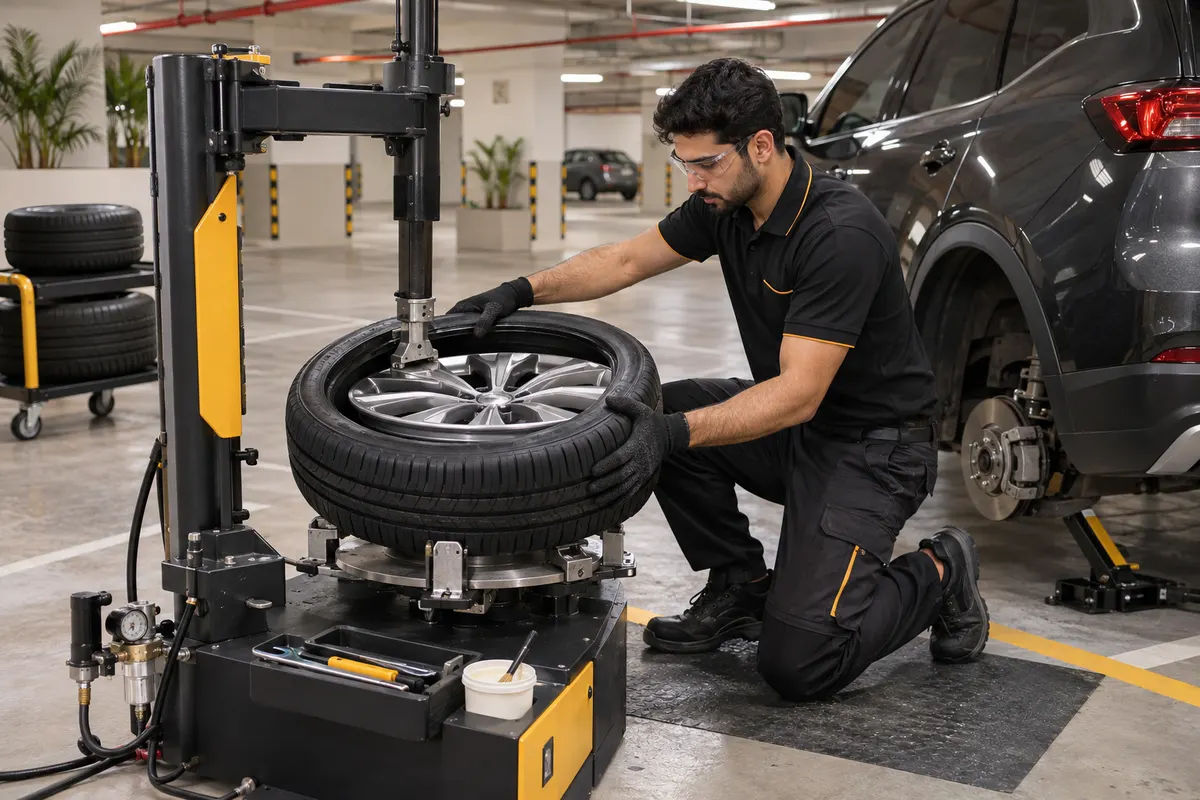
Fitting is from AED 100 per visit and includes a new valve, balancing, torque to spec, pressure set to the placard and disposal of the old tyres. Many owners book us to fit at home or in the office car park rather than taking a low car over workshop ramps; see SportContact tyres in Dubai for sizes we fit most often.
If you are weighing it against another brand's flagship, my Continental vs Pirelli comparison looks at how the two approach performance tyres.
To keep the cost down over the life of the car, buy the rear pair and front pair separately as they wear, keep alignment in check and avoid mixing patterns on an axle. If you can pay in instalments, Tabby and Tamara split the cost into four interest-free payments, which helps when a full set on 21 inch wheels runs into several thousand dirhams.