Short answer
Yes. Continental tyres are good: they are a premium German brand, founded in 1871 in Hanover, and are fitted as original equipment by makers such as Mercedes-Benz, BMW, Audi and Porsche. In UAE conditions they give strong wet and dry braking, stable highway manners at 120–140 km/h and good heat resistance, with prices in the premium band.
Key takeaways
- Continental is a top-tier premium brand, in the same group as Michelin, Bridgestone and Pirelli.
- Their biggest strengths in the UAE are braking, highway stability and resistance to summer heat.
- The main trade-off is price, and performance models like the SportContact 7 wear faster than touring tyres.
- Choosing the right line for your car matters more than the brand name on the sidewall.
- Always check the DOT date before fitting: a fresh tyre is part of what makes a good tyre.
A customer asked me the same question last week while I was fitting a set in a basement car park in Business Bay: are Continental tyres actually good, or are you paying for the German name? It is a fair question, and in four years of fitting, repairing and inspecting tyres across Dubai, Abu Dhabi and Sharjah I have handled enough Continentals, new and worn out, to give a straight answer.
The short version is yes, they are good, and on some cars they are the best choice you can make. But no tyre brand is best at everything, and a few Continental lines suit UAE driving far better than others. Below is what I see on real cars, in real heat, on real roads.
Is Continental a good tyre brand?
Continental is one of the four or five largest tyre makers in the world and sits firmly in the premium tier alongside Michelin, Bridgestone and Pirelli. The company was founded in 1871 in Hanover, Germany, and today builds tyres in plants across Europe, the Americas, Asia and Africa to the same global specifications.
The best signal of quality, in my view, is original equipment. When a carmaker such as Mercedes-Benz, BMW, Audi, Volkswagen or Porsche signs off a tyre for a new model, that tyre has passed months of testing on braking, noise, handling and durability. Continental supplies a large share of those fitments, which is why so many German cars arrive in the UAE on Conti rubber with MO, star or N markings on the sidewall.
From the fitting side, I also judge a brand by how consistent it is. Continental tyres come off the van round, balance with modest weights and hold pressure well. I rarely see a new Continental that needs an unusual amount of balancing weight, which tells me the manufacturing tolerances are tight.
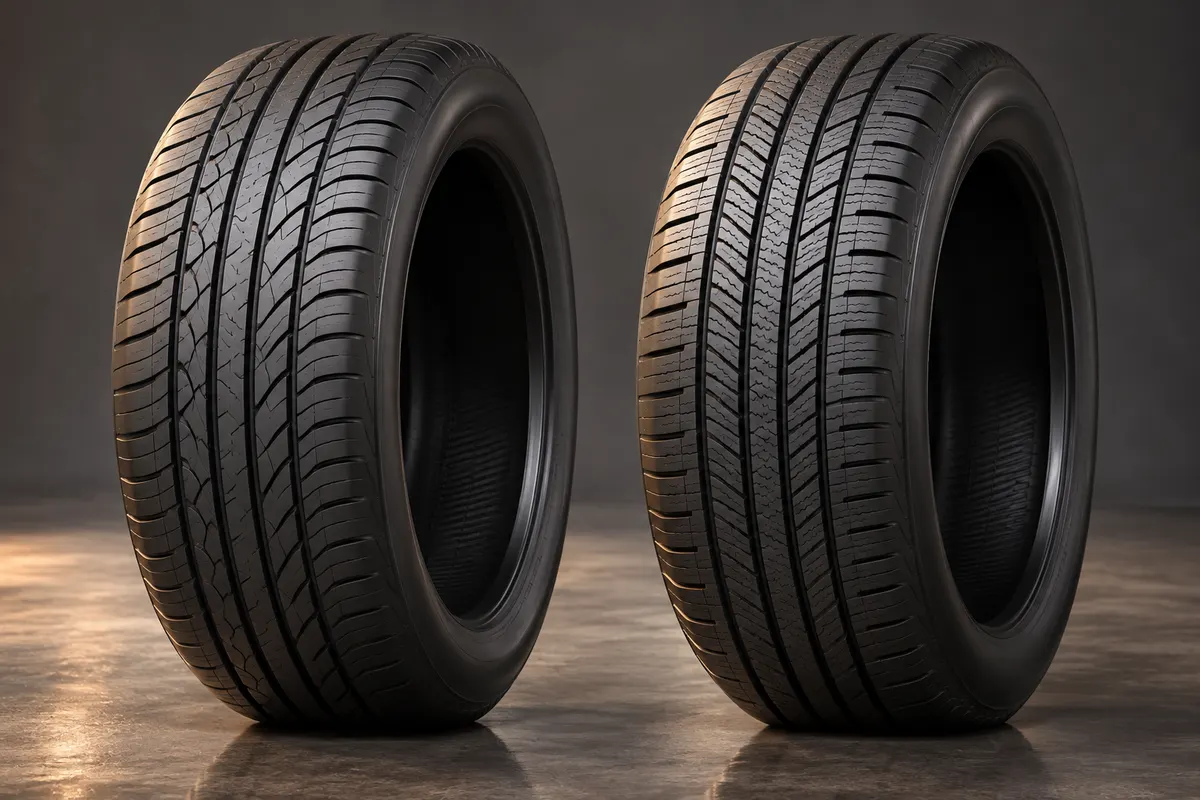
The range is also wide. Continental makes ultra-high performance tyres for sports cars, premium touring tyres for executive sedans, comfort tyres for everyday family cars, highway and all-terrain tyres for SUVs and 4x4s, and van tyres for commercial use. Some lines, such as the UltraContact and MaxContact, are developed for Asia-Pacific and Middle East conditions rather than for European winters, which suits our climate. That breadth means there is usually a sensible Continental option for almost any car I am called out to.
- Founded 1871 in Hanover, Germany
- Premium tier, alongside Michelin, Bridgestone and Pirelli
- Major original equipment supplier to German carmakers
- Consistent build quality: tyres generally balance easily and run true
How do Continental tyres cope with UAE heat?
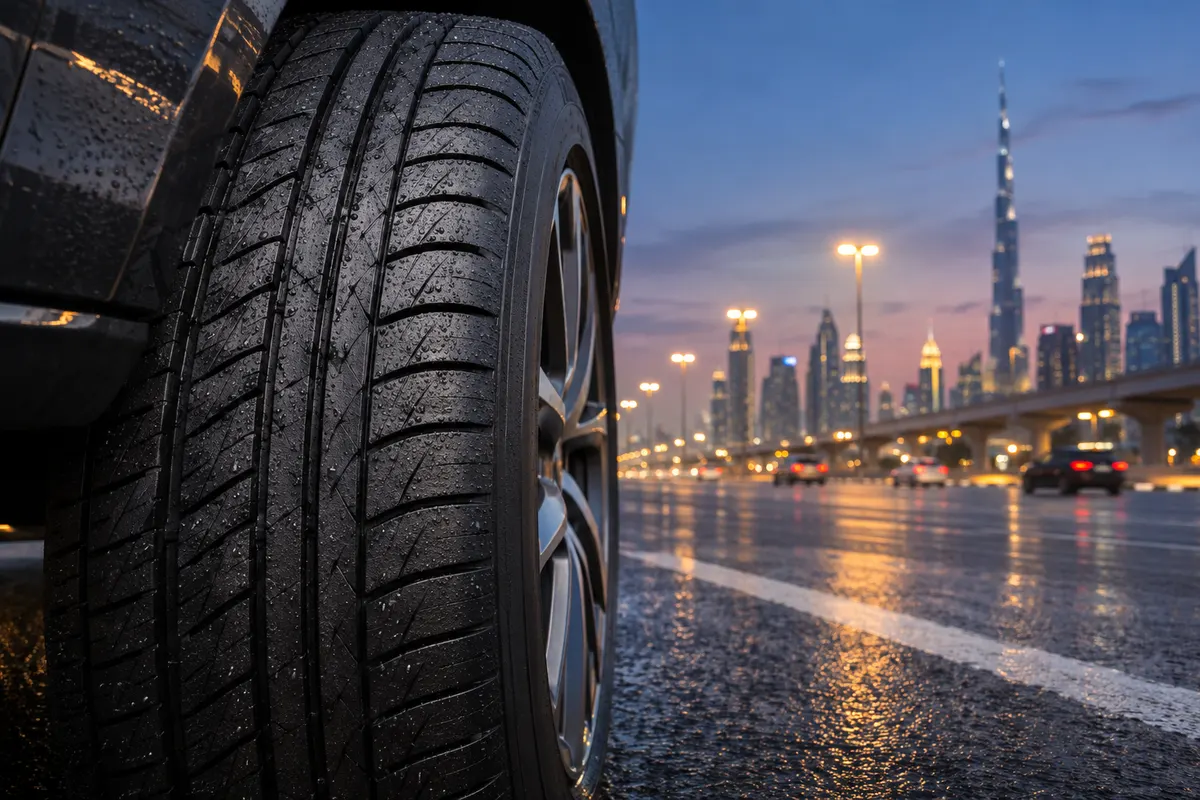
Continental tyres handle UAE heat well, provided they are fitted in the right load and speed rating and kept at the correct pressure. In July and August the road surface in Dubai and Abu Dhabi regularly reaches 60–70°C, and a tyre running at 130 km/h on the E11 is working harder than in almost any other climate.
The compounds Continental uses in its current touring and SUV lines, such as the PremiumContact 7 and the UltraContact UC7, stay stable in that heat. I do not see the soft, greasy feel or the early shoulder crumbling that some budget tyres show after one summer.
What I do see is damage caused by low pressure. A tyre running 6–8 PSI under the door-placard value flexes more, builds more heat and wears the shoulders. That is not a brand problem; it happens to every tyre. If you want your Continentals to last, check pressure every two weeks in summer, cold, before the first drive of the day.
One more heat-related point: do not let pressure down because a tyre feels hard after a long drive. Pressure rises by a few PSI when a tyre is hot, and that is normal. If you bleed air out at a petrol station after an hour on the E311, the tyre will be underinflated the next morning. Set it cold to the door-placard figure and leave the hot reading alone.
Which Continental tyre is best for my car?
The best Continental tyre for your car depends on the vehicle type and how you drive, because the brand makes very different lines for comfort, performance and off-road use. Fitting a sports tyre to a family sedan that never leaves Sheikh Zayed Road wastes money, and fitting a comfort tyre to a 500 hp German saloon wastes the car.
As a rule, I point sedan and hatchback owners towards the UltraContact UC7 or the PremiumContact 7, owners of fast cars towards the SportContact 7, and SUV owners towards the CrossContact family. The table below shows how I usually match lines to cars.
For big SUVs that do mostly highway and city driving, the CrossContact LX2 is quiet and long wearing. If you drive the dunes at weekends, the TerrainContact A/T is the more sensible choice. If you are not sure, the SUV tyre guide breaks down sizes and load ratings for the common models in the UAE.
| Vehicle / use | Continental line I usually suggest | Why |
|---|---|---|
| Compact and mid-size sedan (Corolla, Camry, Altima) | UltraContact UC7 or MaxContact MC7 | Quiet, long wearing, good value for daily city and highway driving |
| Premium sedan (E-Class, 5 Series, A6) | PremiumContact 7 | Balanced comfort, wet braking and highway stability |
| Performance car (AMG, M, RS, Porsche) | SportContact 7 | Maximum dry and wet grip, precise steering at speed |
| Family SUV on tarmac (RAV4, X5, Q7) | CrossContact LX2 or CrossContact RX | Comfort and tread life with SUV load ratings |
| 4x4 that goes into the desert (Patrol, Land Cruiser) | TerrainContact A/T or CrossContact ATR | Tougher tread and sidewall for sand and gravel |
| Electric car (Tesla, BYD) | EcoContact 6 or PremiumContact 7 (EV-rated sizes) | Low rolling resistance and support for heavy battery weight |
What are the downsides of Continental tyres?
The main downside of Continental tyres is price: they sit in the premium band and usually cost more than mid-range Asian brands of the same size. On a 19-inch SUV the gap can be several hundred dirhams per tyre.
The second trade-off is tread life on the sportier lines. A SportContact 7 is built for grip, and its soft compound will wear faster than a touring tyre, especially on a heavy, powerful car driven hard. That is normal for any ultra-high performance tyre, but customers sometimes expect a sports tyre to last like a comfort tyre, and it will not.
A few other honest points from the van:
- Some less common sizes are not always in stock in the UAE and may take a few days to arrive
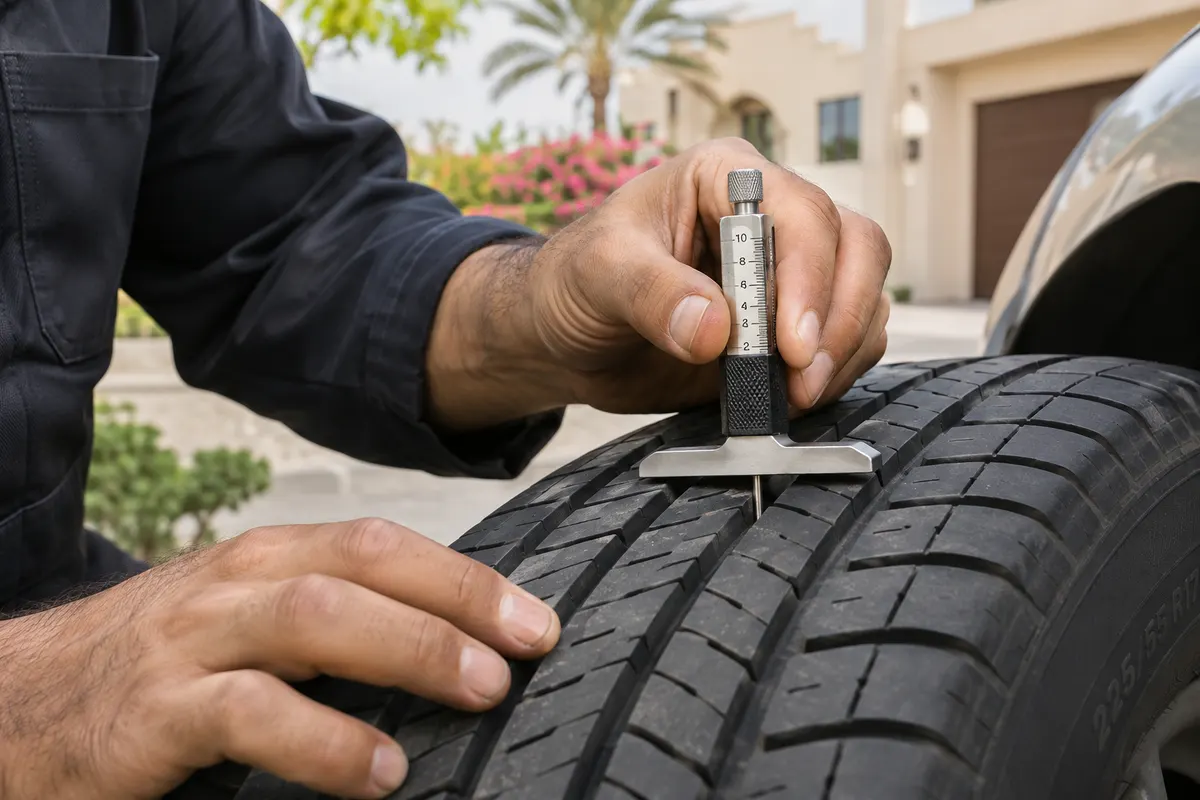
- Performance models can get noisier as they wear below about 3–4 mm
- ContiSeal and ContiSilent versions cost a little more and are not available in every size
- Run-flat (SSR) versions ride firmer than standard tyres, as all run-flats do
- Premium tyres still need correct pressure and alignment: no brand fixes a car that is out of alignment
How long do Continental tyres last in the UAE?
Most Continental touring and comfort tyres I replace in the UAE have done somewhere around 40,000–60,000 km, while performance tyres on powerful cars are often finished sooner. That range is my own observation from replacing worn sets, not a manufacturer figure, and it moves a lot with driving style, alignment and pressure.
The UAE is hard on tyres in a few specific ways. Long, fast runs on the E11 and E311 build heat. Speed bumps and steep basement ramps load the sidewalls. Sand and gravel on hard shoulders scrub the tread. A car with a slightly bent alignment from a pothole can wear the inner edge of a new tyre down in a few months.
Age matters as well as distance. Even a tyre with plenty of tread is a risk once the rubber hardens, and tyres more than five years past their DOT date are commonly rejected at inspection. I go into more detail in my guide on how long Continental tyres last in the UAE.
Are Continental tyres worth the money?
Continental tyres are worth the money if you value braking distance, high-speed stability and a quiet cabin, because those are the areas where premium tyres pull clearly ahead of budget ones. Braking is the one I care about most: the difference between a premium and a budget tyre on a wet or dusty road can be several car lengths, and that is the gap between a near miss and a claim.
In the UAE a Continental touring tyre typically costs around AED 420–650 in 17-inch, AED 520–850 in 18-inch and AED 700–1,100 in 19-inch. Performance and large SUV sizes cost more. Prices vary with size, load and speed rating, OE marking and stock, so treat those as typical bands rather than quotes. Our Continental tyre price guide for the UAE lists current ranges by size.
If you drive a small car mainly around town at low speeds, a premium tyre still helps, but the benefit is smaller. If you drive a heavy SUV or a fast saloon on the highway every day, I would not save money on tyres.
It also helps to think about cost per kilometre rather than cost per tyre. A good touring tyre that lasts several summers, stays quiet and keeps braking well until it is worn out often works out cheaper over its life than a budget tyre that hardens, gets noisy and needs replacing sooner. Spreading the cost is possible too: we accept card, cash, Apple Pay, and four interest-free payments with Tabby or Tamara.
How do I make sure I am buying genuine, fresh Continental tyres?
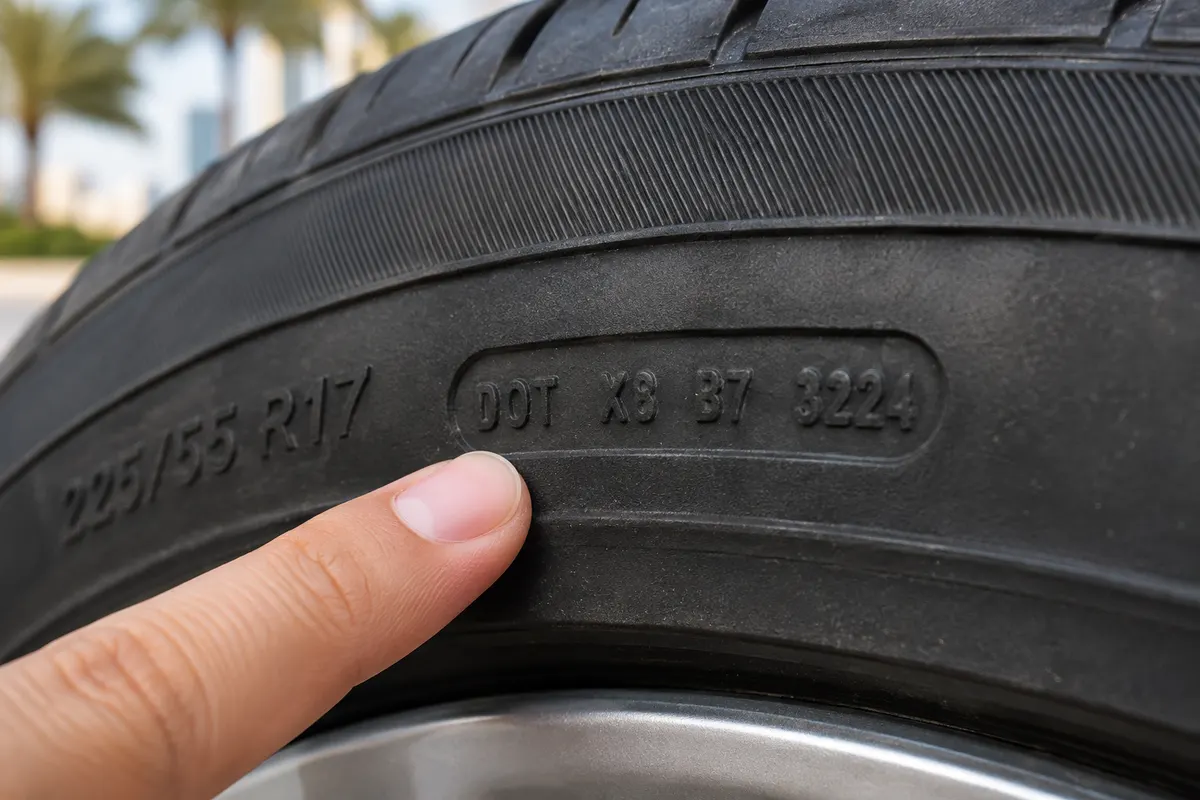
The simplest way to make sure a Continental tyre is genuine and fresh is to read the DOT code on the sidewall before it is fitted. The last four digits show the week and year of manufacture, so 1426 means week 14 of 2026.
Old stock is a real issue in this market. A tyre that has sat in a hot warehouse for three or four years can look new but already be partway through its useful life. I always show the customer the DOT code before I mount anything, and I would encourage you to ask the same of anyone fitting your tyres. My guide to reading the Continental DOT date code walks through it step by step.
Also check that the OE marking matches what your car came with if it has one, such as MO for Mercedes-Benz or a star for BMW, and that the load index and speed rating are at least as high as the original tyre.
So, are Continental tyres good? My verdict
My verdict after four years in the trade is that Continental tyres are very good, and among the best you can buy for UAE highway driving, with braking and stability as their clearest strengths. They are not the cheapest, and the sports lines trade tread life for grip, but I rarely see a correctly fitted, correctly inflated Continental fail early.
Where they compete closely with rivals, the choice often comes down to the specific model and size rather than the brand. I compare them head to head in Continental vs Michelin for UAE drivers, which is the comparison I am asked about most.
If you are unsure which line suits your car, send us your tyre size and car model and we will suggest two or three options with typical prices, then fit them at your home or office.