Short answer
Continental and Bridgestone are both premium brands. Continental usually has the edge in wet braking and sharp highway handling, especially on European cars. Bridgestone is strong in durable SUV and 4x4 tyres and is a common factory fit on Japanese models in the UAE. Pick by model, size and price rather than by brand name.
Key takeaways
- Both are premium brands; Bridgestone is Japanese (founded 1931), Continental German (founded 1871).
- Continental tends to lead on braking and handling, particularly on European cars.
- Bridgestone's Dueler and Alenza lines are proven on big Japanese SUVs and 4x4s in the Gulf.
- Compare Turanza 6 with PremiumContact 7, and Alenza with the CrossContact range.
- Stay with the OE brand if your car carries an OE-marked tyre and you liked how it drove.
Walk through any car park in Abu Dhabi and look at the tyres on Land Cruisers, Patrols and Camrys: a lot of them left the factory on Bridgestone. Walk through the car park at a Dubai office tower full of German saloons and you will see Continental everywhere. So when these customers need new tyres, the question is natural: stay with what came on the car, or switch?
In four years of fitting tyres in the UAE I have replaced worn sets from both brands on every kind of vehicle. We sell only Continental, but Bridgestone is a serious competitor with real strengths. This is how I explain the difference to customers.
Is Continental better than Bridgestone?
Continental is not simply better than Bridgestone: both are premium brands, and each has categories where it is particularly strong. Continental is known for braking and handling, while Bridgestone is known for robust, durable tyres and a very wide SUV and 4x4 range.
Bridgestone was founded in 1931 in Kurume, Japan, and is one of the largest tyre makers in the world. Continental was founded in 1871 in Hanover, Germany. Both have extensive original equipment business, but with different emphasis: Bridgestone is a frequent factory fit on Japanese cars, while Continental supplies many German manufacturers.
That original equipment pattern shapes what UAE drivers see. If you drive a Toyota or Nissan, there is a good chance your first set was Bridgestone. If you drive a Mercedes-Benz, BMW or Audi, it was often Continental.
That does not mean you have to stay with the factory brand. The original tyre is a good baseline because the carmaker tested it on that chassis, but any premium tyre in the correct size, load index and speed rating is a legitimate replacement. Many owners of Japanese SUVs switch to Continental for quieter highway manners, and some owners of German cars try Bridgestone for value in a particular size. What matters is matching the specification and replacing in pairs per axle at minimum, or all four on an all-wheel-drive car or 4x4.
How do Continental and Bridgestone compare model by model?
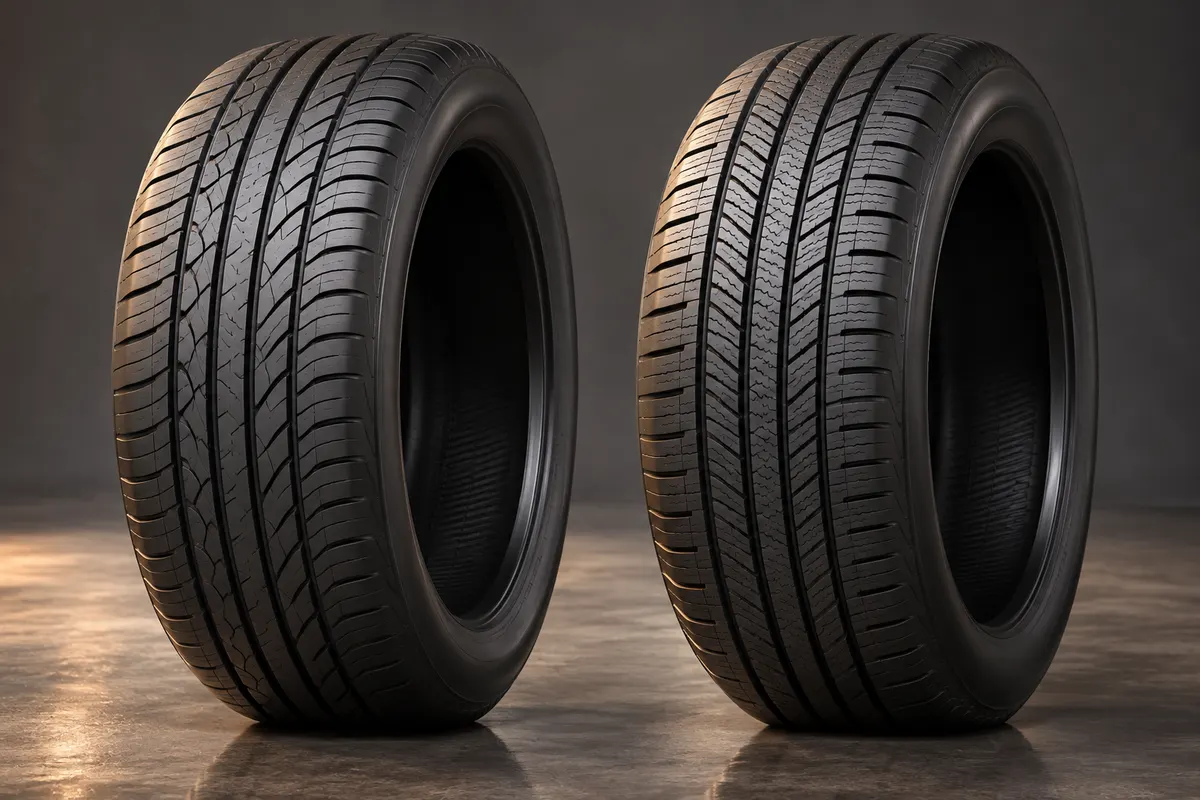
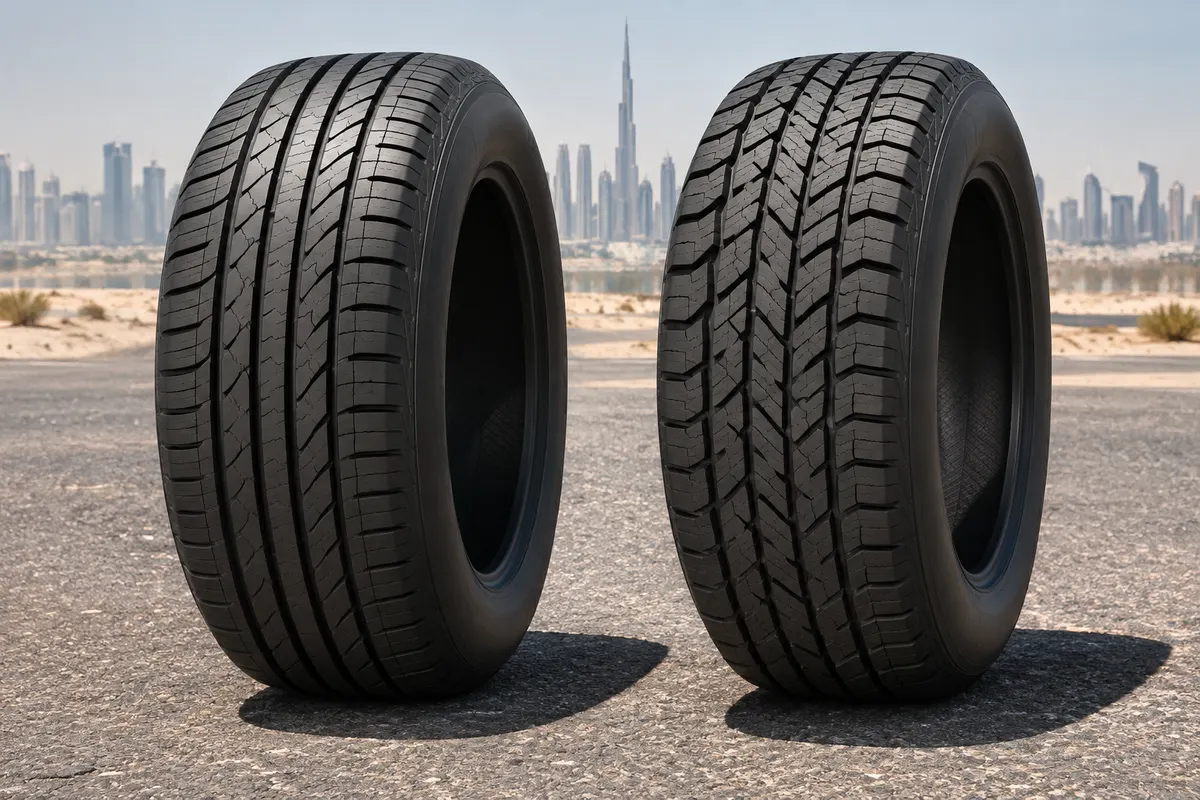
The useful comparison is between equivalent lines in each brand, because a sports tyre and a touring tyre from the same brand behave completely differently. The table in this article lines up the main equivalents I see in UAE sizes.
For sedans, the Continental PremiumContact 7 is the natural rival to the Bridgestone Turanza 6, which is Bridgestone's current premium touring tyre. For performance cars, the SportContact 7 competes with the Bridgestone Potenza Sport. For SUVs on tarmac, Continental's CrossContact LX2 and CrossContact RX compete with Bridgestone's Alenza line. For 4x4s that leave the road, the TerrainContact A/T meets the Bridgestone Dueler A/T range.
In the value-focused comfort segment, Continental's UltraContact UC7 and MaxContact MC7 compete with Bridgestone's Ecopia and Turanza-type tyres sold in the region.
Both brands also sell run-flat versions for cars without a spare wheel. Continental's are marked SSR and Bridgestone's are marked RFT. If your car came on run-flats, it may not carry a spare or a jack, so switching to standard tyres means you would need a puncture kit or a spare. ContiSeal, Continental's self-sealing layer in selected sizes, is another option worth asking about if you do a lot of driving around construction areas where screws and nails end up on the road.
Which brand is better for big SUVs and 4x4s in the UAE?
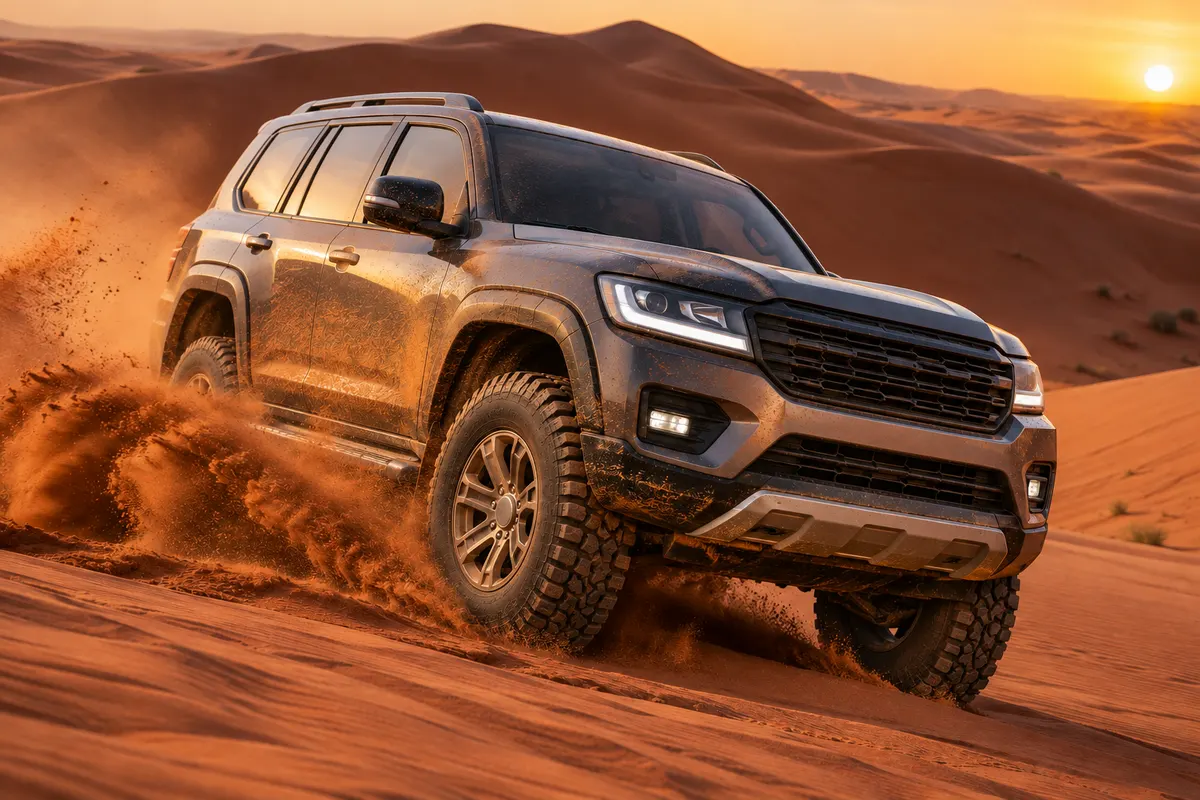
For big SUVs and 4x4s in the UAE, both brands are good, and Bridgestone has a long, proven record on Gulf-market Japanese 4x4s that deserves respect. Its Dueler H/T and A/T tyres are a familiar sight on Land Cruisers and Patrols, and many owners are happy to replace like for like.
Continental's case is strongest for owners who want better on-road manners from a heavy SUV. The CrossContact LX2 is quiet and stable on the highway, and the CrossContact ATR and TerrainContact A/T give a tougher option for drivers who do weekend desert trips. On a 2.7-tonne SUV at 140 km/h, braking performance matters a great deal.
Whatever brand you choose for a 4x4, check the load index. Many UAE SUVs need XL or high load ratings, and fitting a lower load index to save money is something I will not do. Our off-road 4x4 tyre guide lists typical sizes and ratings.
- Land Cruiser and Patrol: check load index and LT versus passenger construction before buying
- Highway-only SUVs: a highway-terrain or touring SUV tyre is quieter and wears better than an A/T
- Desert use: lower pressures in sand put more stress on sidewalls, so choose a tyre built for it
| Category | Continental model | Bridgestone model | Notes |
|---|---|---|---|
| Premium touring | PremiumContact 7 | Turanza 6 | Both quiet and refined; Continental usually sharper in braking and steering |
| Ultra-high performance | SportContact 7 | Potenza Sport | For fast saloons and coupes; both offer strong dry grip |
| Comfort / value sedan | UltraContact UC7, MaxContact MC7 | Ecopia / Turanza-type regional lines | Daily tyres for Corolla, Camry, Sunny-class cars |
| SUV on tarmac | CrossContact LX2, CrossContact RX | Alenza 001 / Alenza Sport | Quiet highway SUV tyres for X5, Lexus RX, Prado |
| Highway 4x4 | TerrainContact H/T | Dueler H/T | Common on Land Cruiser and Patrol; Bridgestone is a frequent factory fit |
| All-terrain 4x4 | TerrainContact A/T, CrossContact ATR | Dueler A/T | For gravel, wadis and sand driving |
Which brand brakes and handles better on the highway?
Continental generally has the stronger reputation for braking and highway handling, and on European cars in particular its tyres tend to feel more precise. That is the main reason I suggest Continental to customers who do long E11 runs between Dubai and Abu Dhabi.
Bridgestone's newer touring tyres, including the Turanza 6, are a big step forward for the brand in wet grip and refinement, and they are good tyres. On a Japanese family sedan driven at normal speeds, most drivers would be comfortable on either.
The difference shows most at the limits: a sudden stop on a dusty road, a lane change at 130 km/h, or the first rain after a long dry spell. Those are the moments when a premium tyre earns its price, and where I have the most confidence in Continental.
Heat plays into this as well. A tyre that has been cooking at 60–70°C road temperature for an hour on the E11 is at its most stressed when you need it most. Both brands build premium tyres to cope, but heat punishes any tyre that is underinflated or overloaded. On a fully loaded family SUV heading to Al Ain or Fujairah on a summer weekend, I suggest checking pressures before the trip and using the higher loaded-vehicle figure from the door placard if your car lists one.
How do they compare on comfort, noise and tread life?
On comfort and noise the two brands are close, and the result depends more on the specific model and car than the brand badge. Bridgestone's Turanza line is tuned for a soft, quiet ride. Continental's PremiumContact 7 and UltraContact UC7 are also quiet, and ContiSilent versions in selected sizes add foam inside the tyre.
On tread life, both brands make long-wearing touring and SUV tyres. What I see in the UAE is that tread life is driven mostly by how the tyre is treated: correct pressure in summer, correct alignment, and rotation. A heavy SUV running 8 PSI low in August will wear its shoulders out whatever the brand.
Age matters too. Tyres more than five years past their DOT date are commonly rejected at inspection, so a cheap deal on old stock is not a deal. I always show the DOT code before fitting.
For heavy SUVs, rotation helps both brands last longer. Front tyres on a Land Cruiser or Patrol carry the steering load and the weight of the engine, and they wear the shoulders faster than the rears. Swapping front to rear every 10,000 km or so evens that out, so all four reach the end of their life together and you can replace them as a set.
Punctures are the other thing that ends tyre life early in the UAE, and both brands are equally vulnerable to a screw picked up near a building site. A clean tread puncture can usually be repaired properly from the inside; a hole in the shoulder or sidewall cannot. Our puncture repair service will tell you which it is before anything is replaced.
Is Bridgestone or Continental cheaper in the UAE?
Bridgestone and Continental sit in the same broad premium bracket in the UAE, with Bridgestone sometimes slightly cheaper in common Japanese-car sizes and Continental sometimes cheaper in European sizes. Stock levels and promotions shift this from month to month.
As a guide, a Continental SUV tyre is typically around AED 650–950 in 18-inch and AED 950–1,600 in 20-inch, depending on model and load rating. Touring sedan sizes are lower. These are typical bands, not quotes, and the price is confirmed on WhatsApp with your exact size.
When comparing, ask what is included in the fitted price. We include removal, a new valve, balancing, torque to spec, pressure set to the door placard, and disposal of the old tyre, and we can fit at your home or office through our Continental SUV tyres in the UAE service. Tabby and Tamara instalments are available if you want to spread the cost.
Who should choose Continental, and who should choose Bridgestone?
Choose Continental if braking, steering precision and highway stability are your priorities, or if your car is European and came on Continental from the factory. Choose Bridgestone if your Japanese SUV or 4x4 came on Bridgestone, you were happy with it, and you want a like-for-like replacement.
In more detail:
- German saloon or SUV with an OE marking: stay with the marked Continental (or the marked tyre your car came with)
- Daily highway commuter on a sedan: Continental PremiumContact 7 or UltraContact UC7; Bridgestone Turanza 6 is also good
- Land Cruiser or Patrol used mainly on tarmac: Continental CrossContact LX2 or Bridgestone Alenza/Dueler H/T
- Regular desert trips: Continental TerrainContact A/T or Bridgestone Dueler A/T, chosen by size and load rating
- Tight budget on a Japanese car: compare both in your size; the cheaper fresh premium tyre is a sound pick
My view from the fitting van
My view is that both brands make good tyres, and the worst outcomes I see come from wrong sizes, wrong load ratings and old stock rather than from either brand. For UAE highway driving, I lean towards Continental for its braking and stability.
If you are sitting on the fence, the deciding factors are simple: what your car came on, how it drove, what you use it for and what each brand costs in your exact size today. Send us your size and we will quote fresh Continental options, and tell you honestly if your current tyres still have life in them.
For more comparisons, see Continental vs Michelin, and if you drive off-road, my guide to the best Continental tyres for desert driving.